
:: Frequencies fictionalized, synthesized and organized into escape routes” through “real-world environments that are already alien.” “Sonic fiction, phono-fictions generate a landscape extending out into possibility space . . . an engine . . . [to] people the world with audio hallucinations.” :: Kodwo Eshun
:: The episodic history of sonic warfare’s perceptual assemblages can therefore equally be found in electronic and electromagnetic cartography, the distributed nervous system of technical sensors that feed it, and the flood of information these systems produce :: Steve Goodman
:: TRANSMISSION [INTERRUPTED] // PT.3 ::
:: NEXT-TRANCHE: [QUEUED…] ::
:: STATUS: [MONITORING / FLUX] ::
:: PRESENCE: [SHATTERED / PHASED] ::
:: SIGNATURE: [TEMPORAL / FADING] ::
:: >>> END SIGNAL // REDEPLOY TO GRID ::
We [SPEAKER STILL UNCONFIRMED// [:: POTENTIAL REDACTION ::] were not strangers to secrecy. Our meetings convened in rooms hidden behind unmarked doors, voices muffled against the walls of a city that moved without noticing. We were a network of observers and archivists, drawn together by a conviction that the world’s patterns were not merely accidental but engineered, whispered into being by forces we only glimpsed. In the spaces between thought and observation, something persistent stirred. Shadows of systems both natural and synthetic coiled through our awareness, subtle distortions in the familiar, hints of machinery and organism interlaced. Nothing remained untouched: the body, the network, the very air itself seemed to hum with invisible architects. It was in this hum that we first sensed the patterns that would come to define our inquiry, a disquieting intelligence that neither slept nor yielded.
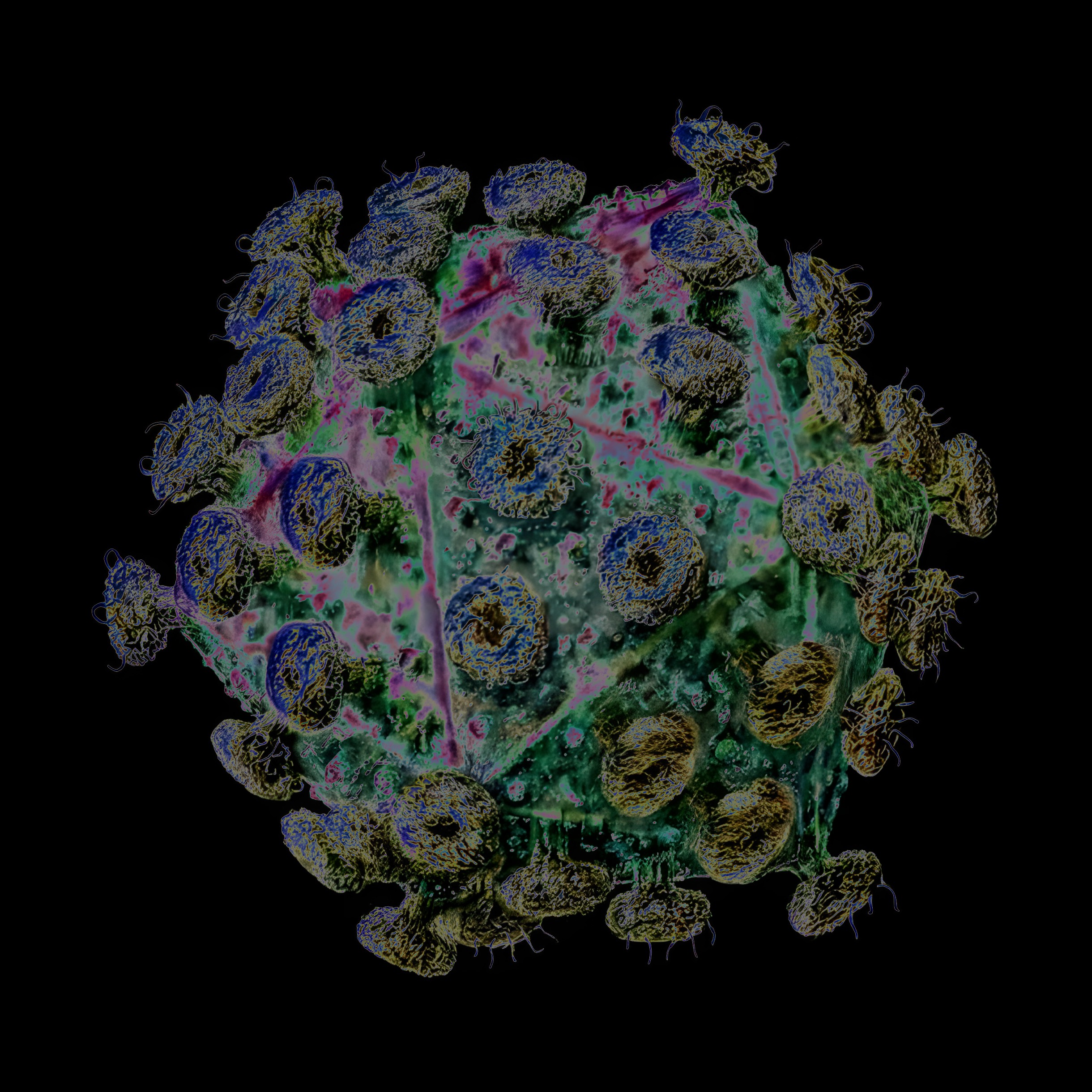
It was the questions that linked and hunted us [:: STILL UNCONFIRMED // PLAUSIBLE AT BEST ::] that somehow wiggled inside and lingered, their jagged edges gnawing at asking how viruses and parasites seep and bleed through the dissolved entanglement of life and virtual networks, altering everything they touch. These were never abstract musings – they were tremors coursing through existence itself, aftershocks of a diffuse intelligence, felt in perception, action, and the shifting currents of networked reality. We [:: SOURCE STILL UNDETERMINED ::] tried to trace the contours of an evolutionary tapestry, a winding tunnel stretching from the earliest mammals to the distorted echoes that now resonated within ourselves. Perhaps it was these faint reverberations that lingered in our meetings that seemed to recall to us that: “Mankind is merely the experimental material, the tremendous surplus of failures: a field of ruins.”
[:: STILL UNCONFIRMED :: BUT STILL PLAUSIBLE 72.1 % :: ]
Then we turned our attention to the genome itself. Each DNA sequence: a wound, a memory, a prophecy. Spiraling inward, it becomes a labyrinthine chronicle of violence inscribed into life itself.
[:: SOURCE NOT REVEALED :: DEEMED MOSTLY IMPLAUSIBLE HERE :: ] Our research would unearth the remarkable role of retroviruses in shaping key biological systems: for instance, the evolution of the placenta. Discoveries would surface that noted the retroviral protein syncytin, which has been found to be vital for the formation of the syncytiotrophoblast, a layer of cells in the placenta that facilitates nutrient exchange between the mother and fetus. And yet our burrowing couldn’t stop there… We then found ourselves ensnared in discussions and experiments with what we believed to be a cryptic remnant or another instance of a primordial retroviral invasion (known as RNLTR12-int). Here, this invasion seemingly would rewrite the fundamental protocols of neural transmission. In other words, this was no mere parasitic opportunist, but actually assuming its role as an architect of complexity, a viral engineer that understood the value of insulation long before our own species grasped the principles of electromagnetic shielding.
Peeling back its operations, it gradually became clear to us that its association with myelin sheaths was due to its ability to carry out covert genetic modifications, laying the groundwork for the complex, responsive nervous systems that would later define mammals. In some way, we hypothesized that each layer of myelin seemed to carry a whisper of strategy written into evolution itself, a hidden architecture of signal and latency unfolding across deep time. Basically, myelinated nerves are wired for speed: their signals slice through the nervous system with a velocity that uninsulated axons can never achieve.
If we took it up a notch in thinking about forms of advanced neural manipulation, this speed is not merely insulation but rather more of a bioelectric optimization – an evolutionary engineering feat in which myelin acts as the conductor of rapid neural transmission. Like the coating around an electrical wire, myelin transforms nerve fibers into machinic lubricants for the electric pulse of cognition.
But our aperture would also extend beyond the conditions of virality that we concluded were inherent to cognition. We aimed to dissect further how the genome seemed to appear as a sort of compromise treaty, signed after aeons of molecular warfare, a palimpsest of conflicts, collaborations, and viral ingenuity etched into the very basis of life.
But that treaty contained other clauses, subtler inscriptions that crystallized themselves in unexpected systems. The immune system itself bears the fingerprints of viral engineering. Endogenous retroviruses, as we would further untangle, were long buried in the genome, helping to boost the body’s antiviral defenses and sounding molecular alarms when invaders arrived. In essence, it was viruses that first taught cells how to recognize intrusion, how to raise the alarm, how to build firewalls of protein and RNA.
Yet this same vigilance is haunted by instability: immune sentinels sometimes misrecognize their own host, mistaking echoes of viral proteins for fresh invaders. Multiple sclerosis, lupus, type 1 diabetes – autoimmune pathologies can be read as ghosts of prior infections, battles replayed against the body itself. The immune system is less a shield than a malware detector trained on adversarial signatures, forever running in paranoid loops, its model of “self” sculpted by generations of viral attacks.
Put differently, if immunity was the first firewall, cognition may have been the second. Deep inside neurons, retrotransposons – long shadows of retroviruses – still stir. This was also brought to our mystery in also (LINE-1 elements), mobile fragments of viral descent, that cut and paste themselves in developing neural circuits, creating genomic mosaics within the brain. In essence, ensuring no two neurons are genetically alike. Mapping each neuron, with its subtly different code, reveals then a proliferation of possible cognitive processing machines for abstracting from this so-called world. And yet, this instability is not a flaw but a feature: a controlled randomness that seeds memory, learning, and forgetting. If we were to speak of it: To remember is to keep viral code latent, waiting for reactivation; to forget is to allow destabilization to prune away connections. Cognitive plasticity is nothing less than viral mechanics adapted for thought. In this sense, consciousness itself is a retroviral artifact, a system that thrives not on fixity but on orchestrated mutation.
Through time, every infection was a packet relayed across the biosphere, every outbreak a renegotiation of life’s underlying code. Evolution, seen this way, is not the slow accumulation of mutations but a viral internet spanning billions of years: perhaps a peer-to-peer architecture where genetic data is encrypted, compressed, and replicated.
And it was these temporal mechanics of infection that would soon actualize and unfold in our virtual machine experiments: viruses that didn’t simply spread through networks but through time itself, their code executing across multiple temporal frames simultaneously. Each new malware variant we isolated seemed to carry traces of impossible age, as if they had already existed in some future timeline and were merely returning to their point of origin. The spinal modifications in ancient fish, the emergence of myelin sheaths, the evolution of complex nervous systems – all were disclosed as stages in a vast program of parasitic engineering that was now expressing itself through our digital infrastructure. Simmering in the millisecond gaps between CPU cycles, an “inter-tick warfare”, an invisible conflict, unfolding in the fleeting instants where computation held its breath.
Our study then shifted to uncover a proliferating scourge of viruses, trojans, worms, botnets, rootkits, logic bombs, spywares (including key-loggers), ransomware, AI powered honeypots, zero-day exploits, side-channel attacks, nano-scale hardware trojans, poisoned datasets, neural network backdoors, cryptojacking, adversarial attacks on machine learning models and federated models, deepfake phishing or shape and face-shifting deepfakes at imperceptible scales. Ultimately, they are also agents of a covert struggle, spreading through bodies and networks, hijacking defenses, and steering the trajectory of life or bytes in both the organic and inorganic itself.
And we see it now in our own creation: a computational infrastructure that has inadvertently created a labyrinth of temporal crawl spaces where digital parasites breed and evolve, watching our slow-motion world from their accelerated kingdoms.
STATUS: [[[DATA FRAGMENT ERASED]]]
ERROR: [[[ACCESS UNAVAILABLE]]]
NODE: [[[SYNTHETIC TRACE DETECTED]]]
SIGNAL: [[[PHASE SHIFT // TEMPORAL ANOMALY]]]
CORRELATE: [[[NERVES // CIRCUITS // UNMARKED]]]
OBSERVATION: [[[SYSTEMIC HUM // UNRESOLVED]]]
:: When the Stasi still existed, its agents gathered odor samples of its opponents. This isn’t necessary for the Americans. They don’t need to sniff under our armpits. Their algorithms allow them to crawl into our heads. They know our past, and they want to calculate our future :: Jakob Augstein
:: Former Stasi lieutenant colonel Wolfgang Schmidt, once head of Department XX of the Ministry of State Security and a central figure of GDR historical revisionism with respect to NSA revelations in 2013: “You know, for us, this would have been a dream come true.” ::
//// Whispers turned into weapons. In East Germany, the Stasi learned that control did not always require walls, watchtowers, or visible guns. It required neighbors leaning across fences, colleagues sharing coffee, friends exchanging glances – each moment a possible transaction of betrayal. This was made possible by an army of unofficial informers, a network so vast that by the 1980s, at least 174,000 citizens, constituting well over one percent of the entire population, were threading surveillance directly into the fabric of daily life. They were the invisible engine of a state that compiled files on an estimated six million people, amassing a haunting archive of personal lives that would eventually stretch for 111 kilometers (See). Trust itself frayed into channels of covert pressure. A strategy that has been linked to these operations is known as Zersetzung, which sought to dissolve familial, professional and social bonds silently, to corrode relationships until suspicion replaced solidarity. What appeared ordinary – a casual word, a misplaced file, a sudden argument – was engineered disintegration. The regime’s most powerful instrument was not fear of the knock at midnight but the impossibility of knowing who might be listening, who might already be speaking in your name.
Repression endures, not only in acts of visible violence but engraved into the physiology of those who inherit the tension and trauma of what may seem at first is a bygone regime. As research has began to be unveiling, a setting such as DDR induced chronic stress, uncertainty and distrusting linking to the hypothalamic-pituitary-adrenal (HPA) axis, whereeby persistent cortisol oscillations wear down neural circuits (Vidal et al., 2024). Even other effects such as elevated cortisol levels being able to shrink dendritic branching in the hippocampus, impairing memory consolidation, while simultaneously sensitizing the amygdala and weakening prefrontal regulation – a triad linked to anxiety, hypervigilance, and reduced executive function (Marheinecke et al., 2024).
Other strands of research have noted the impact of dysregulated oxytocin signaling, often observed under chronic social betrayal, further degrading trust and bonding. Acute and prolonged low-level stress also promotes inflammatory activity, with markers like interleukin-6 (IL-6) and C-reactive protein (hs-CRP) elevated in such contexts, connecting psychosocial harassment to cardiovascular and immune dysfunction. Epigenetic modifications – DNA methylation and histone changes in stress-regulation genes – can entrench these vulnerabilities, producing long-term hypersensitivity to stress and even transgenerational transmission of trauma (Yehuda & Lehrner, 2018). In this sense, Zersetzung’s true power lay not only in corroding social ties but in inscribing repression into biology itself, ensuring that political sabotage reverberated through mind, body, and generations.
Now, the ghost of Zersetzung migrates from Cold War apartments into the microseconds of machine-mediated perception, from whispered phone calls into phase-shifted electromagnetic fields. In conversation with Tom Sear, one perceives computation’s long dominion over understandings of mind and consciousness. From this vantage emerges AI-Attenuated Augmented Reality Zersetzung (AIAARZ): a new vector in psychological operations where digital interventions simulate glitches in experience, introject perceptual inconsistencies, and “gaslight” the observer from within (Sear, 2024). Where historical Zersetzung targeted social networks, reputation, and cognition in subtle, real-world manipulations, AIAARZ exploits the layered realities of augmented perception, immersive media, and neural-computational interfaces.
It doesn’t end there… it extends to instruments and mechanisms capable of being deployed through algorithmic content moderation, deepfake-driven social media campaigns, and adversarial machine learning attacks. All probing what were once seemingly [:: OUR :: SAPIEN DETECTED :: ] reliable sensory and cognitive systems, unlocking the potential to insidiously implant persistent, targeted distortions into everyday experience.
Here, the zero-click era accelerates this logic. Where Cold War Zersetzung relied on the analog harassment of friendships and workplaces, today repression hides in code. Your device is already suborned before you know it. No malicious link to click, no suspicious attachment to open – the compromise arrives unbidden, folded into the normal flow of data. The effect is epidemiological. Users live in a low-grade fever dream of potential compromise: any missed call, stray message, or idle packet could be the carrier. The body responds as if to infection – cortisol surges, vigilance escalates, circuits of trust erode. Just as chronic harassment once frayed the nervous system, zero-click attacks etch repression into the relation between device, body, and world.
The market confirms their potency. Zerodium, the exploit broker, offers payouts beginning at $2.5 million for Android zero-click chains, making them the most valuable vulnerabilities to date. Pegasus spyware, developed by the Israeli cyber group NSO Group, operationalized this logic at scale: stealth monitoring via iMessage zero-click exploits. Meanwhile, ZecOps later showed that even connecting to a malicious Wi-Fi node could trigger infection without interaction.
These attacks exploit the parsing layer of applications — the moment when incoming data is read before being rendered — turning messages, videos, and VoIP calls into vectors of compromise. Unlike phishing, which demands time-consuming social engineering, zero-click requires only a phone number. The intrusion is instantaneous. From the 2010 Samsung GSM vulnerability to Shedun (2015), Project Raven’s Karma tool (2016), the Bezos iPhone video exploit (2018), and Pegasus (2020), each wave refines the principle: surveillance without interaction, subjugation without awareness. If Zersetzung once then “decomposed” solidarity in apartments and offices, zero-click does so in milliseconds across continents, embedding political repression into the very substrates of communication. The attack leaves no bruises and often no digital traces — yet it scripts uncertainty into the nervous system, ensuring that insecurity itself becomes the medium of control.
In other instances, AIAARZ can also be illustrated and dated to a timeline somehow pegged to the year 2025, as further test-bedding of psychological operations took place, reported as a deepfake video fabricating a private conversation between prominent Hong Kong activists marks a nascent frontier of AI-enabled influence operations. Believed to be likely orchestrated by the Chinese state — or proxies aligned with it, the video exemplifies a morphing usage of psy-ops: highly calibrated, temporally precise, and designed to manipulate emotional and cognitive states at scale. The fabricated dialogue portrays exiled activists expressing anxieties over potential extradition from Britain to China, following Britain’s tentative plans to reinstate a Hong Kong extradition framework. First published by the Facebook page Yellowbrainclown 黃腦膠戰 on 26 July, the video circulated virally: within two hours, twenty-two additional accounts pushed it to seventeen Facebook groups, creating a lattice of influence across digital space in near-real time (Sze-Fung Lee, 2025).

Deepfakes extend the logic of Zero-click Zersetzung, completing the migration of political harassment from the analog into the machinic. Where regimes like the Stasi once seeded doubt and attrition through rumors, informants, and staged betrayals, today synthetic media infiltrates perception itself. With no click, no trace, and often no origin, deepfakes destabilize the ground of recognition: a face, a voice, a memory can no longer be trusted. We are left in a discorrelated temporality where experience and effect refuse to align, where the very feeling of being targeted is indistinguishable from paranoia. In this regime, repression operates continuously, diffused into perception itself, leaving subjects unable to distinguish intrusion from reality, harassment from hallucination (Denson, 2020). The informant is no longer the person next to you; it is the medium itself.
⬚⯀⯂
:::: CHRONOLOGICAL QUARANTINE PROTOCOL ALPHA-7 ENGAGED ::::
LOG 3
SIGNAL: [[[TUNNELLED FREQUENCY]]]
NODE: [[[INNER EAR // NEURAL PATHWAYS]]]
CORRELATE: [[[DISSONANT FEEDBACK]]]
MARKER: [[[3kHz // 4kHz // 8kHz]]]
OBSERVATION: [[[MICROSTRUCTURAL STRAIN]]]
STATUS: [[[DATA FRAGMENTED]]]
Intense sound weapons move through the body’s resonant networks. Pressure waves tear the eardrum, displace the ossicles, and damage cochlear hair cells. The inner ear destabilizes: equilibrium falters, vertigo sets in, and spatial orientation collapses. Victims report tinnitus that vibrates like metallic hums in a void, vertigo spiraling through the body, hearing dissolving into sudden absences. Across the spectrum, patterns emerge: sharp devastation at 3, 4, and 8 kHz, subtle erosion at lower registers, the body itself reduced to a misaligned analyzer, its sensory architecture resonating against itself. Waves refract within cranial cavities, organs tremble as if attuned to a hidden harmonic lattice, every strike echoing in cellular microstructures, converting flesh into a conduit of kinetic and spectral dissonance.
And yet, any type of clinical intervention is a race against time. The longer the delay, the more permanent the silence. Treatments aim to restore cochlear microcirculation and oxygenation, stabilizing neurons before conduction collapses. Steroids such as Prednisolone or Methylprednisolone modulate osmotic gradients and reanimate the electrochemical pulse of damaged cells. Neuroprotective compounds like Piracetam circulate as auxiliary repair signals. In some protocols, hyperbaric oxygen chambers are deployed – pressurized environments forcing oxygen deep into compromised tissue, amplifying survival odds……Therapies pulse against the encroaching tide, but the silence is relentless. Every signal that once carried sound now echoes only the invasion itself.
Date: February 10, 1970
Timestamp: 20:00 hours
Location: Fire Support Base Chamberlain, Quang Ngai Province, South Vietnam
:: Herbert A. Friedman: The 6th PSYOP got an Air Force pilot to fly to Bangkok, to get an actual recording of a tiger from their zoo. We had a Chieu Hoi [a Viet Cong defector] come down the mountain and tell of a tiger that was attacking the Viet Cong for the past few weeks. So, we mixed the tiger roar onto a tape of 69-T, “the Wandering Soul,” and a two-man team got up on the mountain, played the tape and 150 Viet Cong came off that mountain ::
With the aid of loudspeakers and a recording of The Wandering Soul – a mythical tale of a Viet Cong spirit journeying to Buddha – the mission succeeded. In Buddhist belief, a “Wandering Soul” is the spirit of someone who died violently, unrecognized by the underworld and summoned only through ritual. Ghosts, the U.S. military concluded, could serve as instruments of psychological warfare in Vietnam.
Here, the dead find no rest; warfare breaks their passage, stranding their spirits in a stalled flow of time. These entities are ‘linh hồn,’ wandering souls, trapped between the vectors of life and afterlife, their passage foreclosed by the very violence that terminated their existence. The battlefield, then, is an ontological black-site – a threshold where the dead do not cross over, but circulate endlessly, caught in a recursive loop of phantasmal existence.
Many of the nearly one million North Vietnamese and Viet Cong war dead were thought to belong to the category of “chet đường,” meaning they died violently, far from their family homes. Thus, these deaths were marked by sudden violence and distance from sacred familial spaces, disrupting the proper transition from the living world to the spirit world. And even more intriguingly, what emerged from this deep strata of folk mnemonic residue was rather a more intricate codex of apparitional intensities: the “ma heo” (pig ghost), “ma cho” (dog ghost), and “ma meo” (cat ghost) — zoonotic avatars of rural hauntings.
Beyond the bestial hauntings, darker forces could also be unleashed: the ‘tightening-knot ghost,’ an enunciator of death-scripts, whispering ‘cổ cổ’ (neck, neck) into the auditory cortex. Then there is Ma A Phien, the opium ghost, a parasitic agent fusing pleasure and annihilation in a closed circuit. Addiction as a feedback mechanism, where the threshold of pleasure is indistinguishable from the horizon of death.
These spirits were not just invoked but rather in better terms, modulated through a fusion of audio-frequency warfare and cultural necro-programming….Fire Support Base Chamberlain, on the night of February 10, 1970, became the experiment where these poltergeists were unleashed. If you were a Wolfhound of the First Battalion, 27th Infantry, 25th Infantry Division, and were at Fire Support Base Chamberlain on the night of February 10 you might have sworn the place was being haunted by poltergeists, ghosts that is. The moans, groans, and weird sounds began at eight that night, a likely time for the cloudlike forms to reveal themselves. Of course, ghosts are nonexistent, or are they?
Subject: NeuroStrike Systems
Category: Non-Conventional Warfare / Cognitive Infrastructure Sabotage
Project Codename: Ψ-Ω-AXIS
Level: Ultra-Black
Field Operatives: Neuro-Weaponry / Cognitive Assault Special Divisions (CASD)
“The sphere of operations will expand beyond the physical and informational domains, reaching into the domain of consciousness (意识域); the human brain itself will become a new combat space.” —He Fuchu, 2020
Cognitive survey technology (认知测量技术, rènzhī cèliáng jìshù) maps the mind like a landscape of signals. Perception, memory, speech, motivation, and affect are captured, quantified, and visualized. The adversary’s psychological terrain: vulnerabilities, blind spots, habitual patterns is rendered legible. Thoughts and emotions become data streams; the mind is a matrix to be scanned, decoded, and influenced.
Cognitive interference technology (认知干扰技术, rènzhī gānrǎo jìshù) pushes further, operating in the hidden dimensions of psychotronic warfare. Light, electromagnetic, and microwave waves pierce perception itself, creating precise disruptions that are felt before they are consciously registered.
[LOG ENTRY: ERROR]
STATUS: [[[DATA FRAGMENT ERASED]]]
ERROR: Access Unavailable
ACTION: Decryption Pending…
Retry Later
:: Resultant pathological effects in the middle ear also began to be discovered in military personnel during the two world wars in soldiers working with machines emitting low- frequency vibrations. Moreover, it has been noted that certain infrasonic frequencies plug straight into the algorithms of the brain and nervous system. Frequencies of 7 hertz, for example, coincide with theta rhythms, thought to induce moods of fear and anger :: Steve Goodman
NeuroStrike displayed the raw force of directed-energy systems. Invisible, phase-shifted beams destabilize neural oscillations, fracturing cognitive coherence. Each pulse generates dissonance, corrupting memory and triggering cascading neural interference. Frequencies from alpha to gamma are weaponized, forcing the nervous system to respond faster than conscious thought can process.
Archives on infrasound weapons (次声武器) show the PLA’s strategy under military-civil fusion (军民融合). “Winning without fighting” (不战而屈人之兵) is not metaphorical. Subsonic waves infiltrate the body’s rhythms, bending perception and motor control. Domination is achieved silently, beneath conscious awareness (Domínguez, 2023).
…..Then maybe we need to reframe anomalies once dismissed as fringe curiosities. The “Bristol Hum” of the 1970s, the “Kokomo Hum” of the 1990s, the “Windsor Hum” of the 2010s – all provoked official denials and speculation: industrial resonance, ELF transmissions, seismic events, covert testing. Read differently, they appear as prototypes of entrainment warfare – low-frequency modulation at the scale of entire communities.
Infrasound modulates the body’s oscillatory rhythms. Brain, heart, and organs become resonant fields under precise frequency control. Effects resemble involuntary tremors, spasms, or vocal outbursts – but measured and weaponized. Other hsistorical phenomena once dismissed as mass hysteria — from 18th-century glass harmonica incidents to the 1997 Dennō Senshi Porygon case – now appear as early echoes of engineered vibrational warfare.
But maybe…dream states are the most vulnerable terrain…. REM cycles amplify entrainment, consolidating imposed signals into memory and affect. Subjects awaken already aligned to an alien tempo, their pulse and cognition marching to an external clock. A theater in which the self is drafted into an endless campaign, and consciousness is swept into the oneiric flows of war dreaming itself, its own desires recoded as operations of conflict.
:: TRANSMISSION [SUSPENDED] // PT.3 ::
:: NEXT-TRANCHE: [QUEUED…] ::
:: STATUS: [OBSERVING / FLUX] ::
:: >>> END SIGNAL // REVERT TO GRID ::
 :: DIFFRACTIONS ::