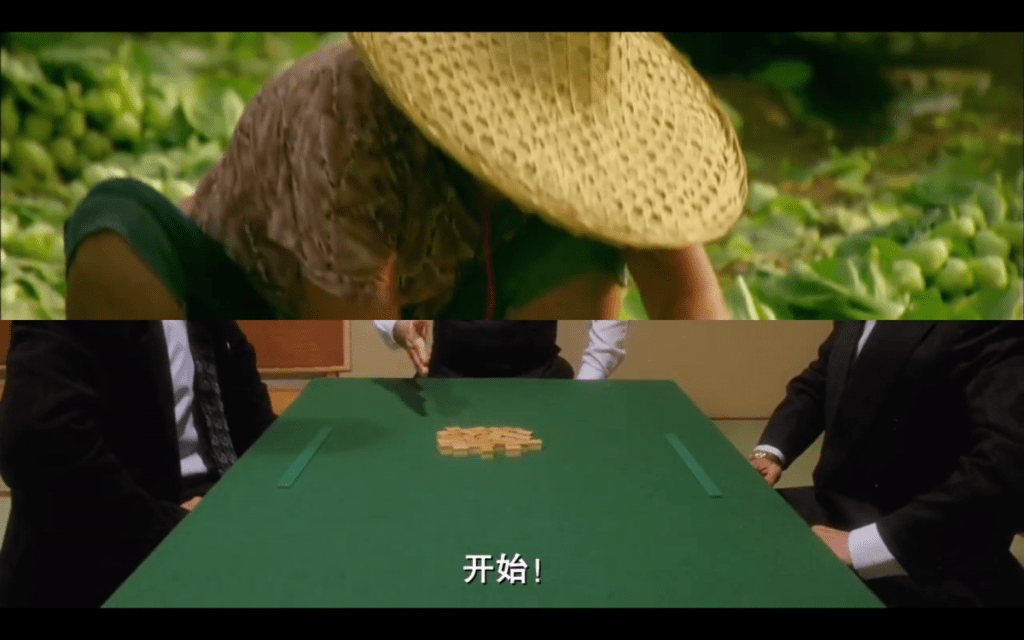
“Sinofuturism is an invisible movement. A spectre already embedded into a trillion industrial products, a billion individuals, and a million veiled narratives. It is a movement, not based on individuals, but on multiple overlapping flows. Flows of populations, of products, and of processes.[1]”
– Lawrence Lek
‘Sinofuturism’ is a complex nested in the technical milieu of capitalist production. It is a “spectre,” (from Lat. larva = “a ghost, specter, mask […]”[2]) which haunts the device, the commodity of a “trillion industrial products” interlocked in overlapping flows of human consumption. Mechanical reproduction is said to have hyperextended itself beyond the event horizon of ideologies, ecologies, and potentialities, and from our vantage point we can discern a process of concretization, of convergence towards systemic optimization. It is at this moment that the technical milieu (in some aspects of its existence) allegedly decouples from direct human control. It is a production-plant retrovirus which works towards rewiring the social memory through flows of informational and computational capital. This text is an exercise in extending the “conspiracy theory.”
In Bernard Stiegler’s typology (developed on the work of Simondon and Leroi-Gourhan), technological systems undergo a process of gradual “concretization” towards a point of “saturation.” Such a structure then crystallizes as a change of quality. The technical milieu will have reached such a point.
“The technical being evolves by convergence and adaptation to itself, it becomes unified interiorly according to a principle of internal resonance.”[3]
Much like the technical object, a systemic aggregate undergoes a process of detailing, of fine-tuning itself according to a virtual blueprint of organicity – the internal combustion engine tends towards concretization much like the cellular photoreceptor curves towards the mammalian eye.
The contention is that Sinofuturism designates a point of saturation, a convergent signifier for the “resonance” of the three major accelerationist phyla: R/ACC, L/ACC, U/ACC (in genealogical order).
Neo-China arrives from the future.
The MittelReich
A metastatic super-organism – the Middle Empire locked into hyperproduction – haunts a landscape where the raw extractionism and fine ash of the industrial era has not been whisked offshore, but rather accreted into a stratified stack of industrial permaculture. Neo-China constitutes an apotheosis/apoptosis of /ACC. The digitized security state which the DPRC and other aggregates are deploying constitutes the foundation of a new bureaucratic paradigm which in the last instance transgresses beyond petty attempts at circumscription by the Western Ctrl-Left or Alt-Right movements, so cogently described in John Michel Greer’s “The Alt-Right, the Ctrl-Left, and the Esc-Center.“ The quaint L/R dichotomous spectrum dissolves in the hypercomplexity of the technical milieu and its collusion with oligarchic and partisan state capital. Political/ethnic/ideological et al. systems undergo apoptosis, dissolving in the informational deluge of the post-capitalist mode of production, one where human agency (the Voice, the command line…) constitute only a discrete position in the cyborg assembly line. The human in the loop becomes ever more a cog, and a fanged inhuman emerges as a chthonic entity from the fallout of the industrial revolution.
Nothing quite human makes it out of the near-future alive.
:: R/ACC ::
R/ACC seeded the realization that the Middle Empire constitutes a horizon for thinking the relationship between markets and engineering. Capitalism constitutes a deep structure which is able to parasite on the clientelism endemic to the bureaucratic state apparatus, all the while signaling a propagandist ideology to the designated demographic. A robust mode of industrial production underwrites the system’s neurosis.
Eventually updating from the neo-feudalist, patchwork proclivities of the NRx, the unholy godfather Land himself had
“realised that ‘to a massive degree‘ China was already an accelerationist society: fixated by the future and changing at speed. Presented with the sweeping projects of the Chinese state, his previous, libertarian contempt for the capabilities of governments fell away.“[4]
The real danger comes from elsewhere.
:: L/ACC ::
What L/ACC predicted was Neo-China’s retention of the socialist mandate. The “new hegemony” which Srnicek and Williams defend has been patched to a digitally inscribed, and soon-to-be blockchained, Mandate of Heaven. The tools for building this new hegemony, free of the promises peddled by self-similar totalitarian systems of the past, is a sluggish, reactive effort – advocating a world of “post-work” and “fully automated luxury communism” outside of the 1917 – 1989 headspace encounters an ingenuity gap difficult to surmount. Simply fusing this “new hegemony” with the underlying socialist project of undamming creative potential seems to be less and less relevant when seen in relation to the weight of various production complexes already locked in operation. To complete the double bind: on the other hand, we hear calls for forms of top-down macromanagement rooted in the systems of the post-Soviet geography – all it takes is a Power Sword.
If a variegated explosion of latent creative potential is to be shored up by a system of planned production and digital governance predicated on the CyberSyn model (which is a popular trope for S+W’s Inventing the Future project) it is in fact the Chinese state which comes the closest.
Don’t look into the mirror. The Megatron battles the forces of NRx and the bourgeoisie.
The ultimate apotheosis of the L/ACC project can be localized in some of the aspects which Sinofuturism and the Middle Empire already manifest – the libidinal economy has become integrated into and subsumed under the mechanical circuit of the ideologico-industrial multiplex, colonizing the social body from within.
:: Wu/WeiCC ::
What U/ACC foreshadowed was the inhuman undercurrent of Sinofuturism, the belief that technological development has, at least in the virtual, long superseded the very relevance of its ‘human’ substrate. The production line takes over. In “Unconditional Accelerationism and the Question of Praxis,” Vincent Garton writes,
“U/ACC charts a course outwards: the structures of Oedipus, the Cathedral, Leviathan, what have you, will be ripped apart and decimated by forces rushing up from within and around the system, which in turn mobilize the entirety of the system towards its own dissolution point. Unlike L/ACC and R/ACC, U/ACC is not at the bottom a political theory; it is one of mobilizing materialism.”
It is this utter subsumption of human-centered constructs under the technical milieu that resonates in both the xenointelligence of Sinofuturism and in Garton’s U/ACC writings. A particular western anthropocentrism (liberal humanism by another name…) crumbles with the realization that the very technological revolution it unleashed is tending towards its own type of convergence and saturation. What Negarestani identifies as the “inhuman” rationality brings its self to completion, and yet persists onward. Lek proposes that
“Sinofuturism is in fact a form of Artificial Intelligence: a massively distributed neural network, focused on copying rather than originality, addicted to learning massive amounts of raw data rather than philosophical critique or morality, with a post-human capacity for work, and an unprecedented sense of collective will to power.”[5]
The concept of the ‘human’ constitutes an ultimate fetish of homo sapiens’ historical development, and both Sinofuturism and U/ACC are more than willing to either re-inscribe it within much vaster, materialist ecologies, or let go of it altogether.
:: A Pluribus Unum ::
All three phyla of /ACC foreshadowed the advent of Sinofuturism – i.e. the speculative trope that a Neo-Empire has been rising up through the emergent and widespread implementation of digital technologies, investment into super-computation, and owning the means of production for the Industrial Revolution 4.0. All these have accelerated the integration of capitalist production within the substrate of a centralized state apparatus. While the west was reifying space colonization as a quaint futurist horizon, the DPRC has been burrowing the state apparatus into the social body. It harvests and augments the material and social energies through projects such as the social credit system, its use of facial recognition technologies for policing and surveillance, digital bureaucracy, forced labor, organ harvesting…
Politics in the age of mechanical self-reproduction are predicated on the exploitation of internal resources, and the Middle Empire and its affiliates are gaining ground in developing a robust infrastructure for geopolitical and domestic advantage. This socio-economic centripetal force of reterritorialization is in the process of assembling a new fasce, of binding ‘the many into one’ under the auspices of an updated and digitized imperial mandate. This technical system is already present in the virtual; an incrementally complete, technically saturated system with reproductive capacity, emitting its own futures.
by Vít Bohal
[1] Lawrence Lek, “Sinofuturism 1849 – 2046 AD,“ Vimeo, accessed 9.11.2018< https://vimeo.com/179509486> [transcript from correspondance].
[2] ‘Larva.‘ Dictionary.com, accessed 9.11.2018< http://www.dictionary.com/browse/larva>.
[3] Bernard Stiegler,Technics and Time I: The Fault of Epimetheus (Stanford: Stanford University Press, 1998). 71
[4] Andy Beckett, “Accelerationism: how a fringe philosophy predicted the future we live in,” The Guardian, May 2017, accessed September 9, 2018< https://www.theguardian.com/world/2017/may/11/accelerationism-how-a-fringe-philosophy-predicted-the-future-we-live-in>.
[5] Lawrence Lek, Sinofuturism (1849 – 2046 AD).
 :: DIFFRACTIONS ::