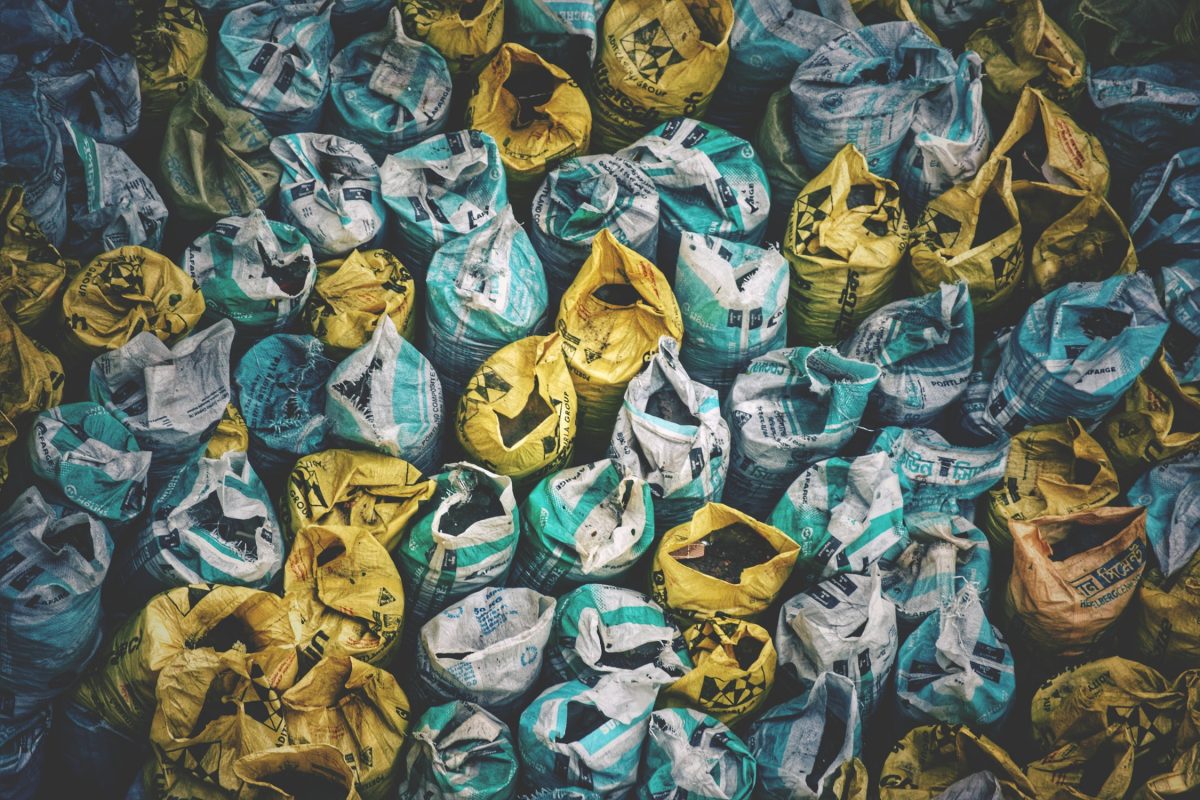
“Y: POSSIBLE FUTURES” is a series of curated events by DIVADLO X10 focused on transdisciplinary and transgenre interconnections, opening new ways of encountering the local and international (art) scene. Diffractions Collective and sdbs will be participating with the installation Operation Anthropolysis.
Concept: The purpose of Operation Anthropolysis is to explore the entanglement of the ‘future’ itself with the morphing nature of Homo sapiens through the influence and infiltration of toxins, chemicals, additives, and contaminants in its environment—especially upon the site of the body. Furthermore, the project highlights how Homo sapiens has always been a palimpsest of mutations that drive non-linear and unpredictable transformations of our species.
This can be accounted for through a range of genetic mutations—for instance: the MCM6 gene, which allowed some people to keep producing the enzyme lactase and digest milk; the RNF213 gene, which improved blood supply to the primate brain, enhancing ancestral intelligence; the MYH16 gene, which weakened our jaw muscles and allowed our skulls and brains to expand; and the AMY1 gene, which increased production of the salivary enzyme amylase, facilitating starch digestion. Homo sapiens has thus adapted, and will continue to adapt, to adverse environmental or alloplastic conditions that have been instrumental in our development—especially now in the age of the Anthropocene/Necrocene.
We will focus on the influence and infiltration of toxins, chemicals, additives, and contaminants that have been voluminously documented to have disruptive effects on the human endocrine, immune, reproductive, nervous, and other systems. This is exemplified by Bisphenol A (BPA), which bears a detrimental impact particularly on endocrine receptors, mimicking human estrogen at low concentrations. Implications have been felt across multiple species: ingestion of plastic has decreased both the quality and quantity of sperm counts among Western men, and over 99 percent of turtle hatchlings in northern Australia are female due to increasing sand and sea temperatures. Moreover, our biosphere has become enveloped in tiny pieces of degraded plastic, synthetic fibers, and plastic beads—collectively called microplastics—that have turned up in every corner of the planet.
Furthermore, petrochemical drifts accumulating on our windowsills and roadsides have been examined by European researchers, who have discovered an array of precipitating materials such as acrylates/polyurethanes/varnish/lacquer (hereafter varnish), followed by nitrile rubber, polyethylene polyamide, and rubber type 3 (ethylene-propylene-diene rubber).
Thus, how does the infiltration of toxins, chemicals, additives, contaminants, and plastics reconstitute the link to and by human actors? Can we imagine how humanity’s technological capabilities, atmospheres, and ecologies will react within these new configurations of contamination? Here, we present the concept of Anthropolysis, derived from ‘lysis’—the breakdown of a cell caused by damage to its plasma (outer) membrane—and extend it to Homo sapiens, as our boundaries and perceived bodily surfaces and internal bio-architecture are disintegrating in the wake of ecological devastation.
Respectively, our installation/project Operation Anthropolysis is an accelerated speculation on the nature of ubiquitous contamination in relation to the morphing of the human into a rapidly evolving creature, driven by forces unleashed by unchecked biotech/nanotech, metamaterials, industrial megaprojects, and nanoparticles. This omnipresence of multiple and multiplying ‘fallouts’ is only a glimpse-metaphor of the true amount of chemicals and their reactants transforming all ecosystems and habitats on the planet, generating terminal waste zones anticipated to endure and accumulate for 100,000 years (3,000 generations). Interestingly, each such Terminal Waste Zone breeds novel life and unexpected sentient forms. We are witnessing a new era of ‘World Waste Making,’ underscoring Tyler Volk’s contention that “The earth is one big waste world.” Critically, ‘waste’ itself has catalyzed the emergence of lifeforms; our own survival is predicated on oxygen, which is a waste product of photosynthesis. The Earth’s soil and water consist in large measure of the built-up waste products of living and nonliving matter. Ultimately, our project is consonant with the focus on how waste is ‘materially world-making’—connecting geosphere, biosphere, and stratosphere.
Through its combined effects on the body-minds and civilizations of humanity, waste is now forming even our noosphere and technosphere. This challenges the conception that ‘waste’ is a static or inert category; rather, it is a dynamic, vibrant, and sentience-producing process that begets a medley of new lifeforms or reconfigured uses—for example, leachate bacteria, bacteria consuming oil spills and radioactive waste, and the emergence of plastic bottle-eating bacteria discovered and synthesized in Japan.
Therefore, as the recognizable contours of Homo sapiens dissolve and mutate in both overt and subtle ways, we can expect to witness the emergence of new forms of sentience and body-mind designs that will gradually efface our standard anthropomorphic template. Hence, how does the nature of contamination and waste—compounded by the pressures unleashed by the grand fragmentation caused by global warming, humanitarian catastrophes, resource depletion, technomic hegemony, state dissolution, and tech proliferation—potentially spawn novel life forms under unimaginable evolutionary pressure?
Furthermore, how does our age reflect what Justin McBrien posits in his work “Accumulating Extinction: Planetary Catastrophism in the Necrocene”: that capitalism operates on a continuum of necrosis where “Necrosis proceeds by autolysis, a form of self-digestion in which a cell destroys itself through its own enzyme action. Capitalism is the reciprocal transmutation of life into death and death into capital. Necrosis is capital’s mode of apoptosis, reproducing the means of production by its destruction. It is both saprophytic and parasitic: it feeds on live and dead nature the same; it seeks to render them indistinguishable. From the standpoint of the Necrocene, capital appears as a species, an opportunistic detritus feeder producing mass extinction in the present through the exploitation of past extinction.”
Here, strategies of assimilating to such toxic environments—used by life forms to survive inside the supradynamic hyperobject of the near-future Earth—can be envisioned and simulated. For our purposes, this spawns consideration of how Homo sapiens has transformed and what transformations are anticipated. Operation Anthropolysis proposes several interactive scenarios for the emergence of such Anthromorphs, adjusted to the many (from our point of view) extremely toxic environments of the future. We will envision future habitats and settlements revolving around Anthromorphs aligned and configured according to mutant and contaminant influences on endocrine, immune, reproductive, nervous, and gastrointestinal compositions. Our installation will comprise imagined scenarios of what these ‘Anthromorphs’—or five variants of these Anthromorphs, a form of ‘speciation through contamination’—will be, their evolving biological-chemical composition mirroring the evolutionary selective pressures symptomatic of unabated ecological destruction, and, crucially, their habitats. Furthermore, we will examine how ‘waste’ is a core element tied to the nature of Deep Time, a temporality that surpasses the minuscule emergence of human life, yet crucially shapes the conditions for inhuman futures to arrive.
Installation and Realization:
We envision and intend to realize our exploration of Anthropolysis through an installational format:
a) First, we will use discarded, makeshift, assembled materials and posters detailing extant and novel life forms that emerge from Terminal Waste Zones.
b) A small “contained waste zone” in the gallery space itself will attempt (through the usage of plastic, saprophytes, and petri dishes) to directly speculate on how synthetic life forms emerge in these conditions.
c) We will explore how and whether these organisms inherit a symbiotic potentiality for life forms to be acclimated into Homo sapiens, enabling the human to cope with the morphing of geopolitical terminal zones.
d) An overarching speculation on the nature of speciation arising through novel configurations of extreme waste will remain active in real-time, incorporated into the gastrointestinal system of a Xenoanthromorph.
e) A short (3–5 minute) video will illustrate the nature of mutation and precisely how the notion of ‘waste’ itself is an ingredient in shaping temporality.


Photos credit: Dustin Breitling