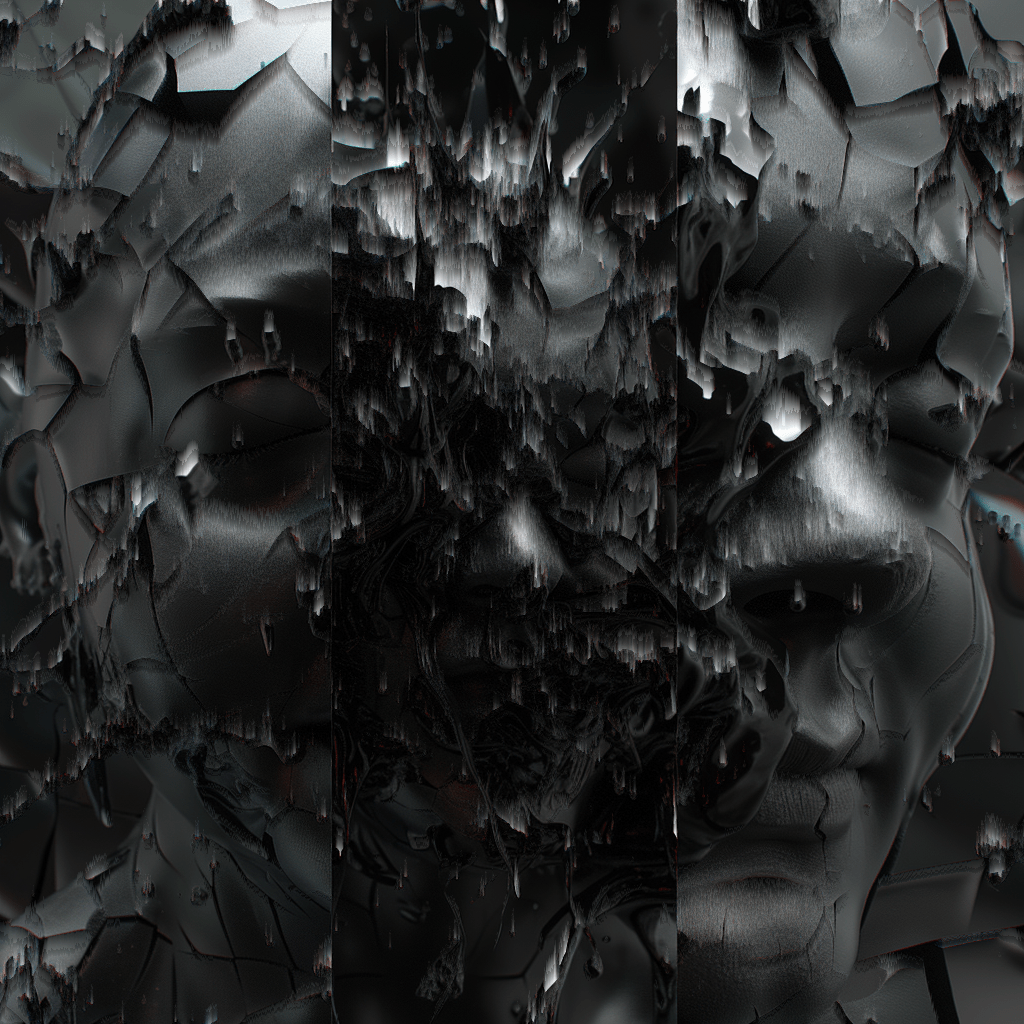
There is a lovely discussion in Julio Cortázar’s Hopscotch regarding the way Piet Mondrian’s work should be approached: “Stand naked in front of him and it’s one thing or the other: either you see or you don’t see.” 1 Something of the like might be asseverated about the work of some contemporary writers 2 whose texts challenge the pretension of universality of the representational cycle.
Written (narrative, conceptual, graphic, structural…) abstraction offers the same wager as figural abstraction: either you read or you don’t read—although reading,” in the traditional sense of the word, might not be the only way to experience those books. The observer’s dilemma about the ungraspability of geometric abstraction exemplifies the cognitive divergence contemporary culture appears to be trapped in: a “seen” Mondrian—or a “read” abstract text—becomes immediately consolidated in a memory system as a distinct and stable figure, inscribed in a recognizable media-environment, and entered in a loosely structured dynamic cycle of pre-existing discursive/iconic representations. The debate about the differences between the active and the passive reception of art—which was essential for Cortázar when Hopscotch was being written (and exemplified in the novel by the Klee versus Mondrian antagonistic interpretations)—seems less relevant today than his intuition of the visual disparity: when the artwork is seen, a passive but identifiable emotional response in the viewer is expected; when it remains “unseen,” conceptual coordinates and cognitive dynamics remain uncertain.
What happens then? Are some physical features coldly recorded, like an alien emotion trapped in ice? Does the impossibility (or refusal) to perceive it linger around forever as a non-symbolized perceptual icon (a kind of “material hypothesis” excluded from the exchange system of signifiers)? Could it be an example—or, at least, an allegory—of those technologies that impact the body in a non-linguistic, unconscious manner?3 This fundamental uncertainty is arguably one of the main features of an emerging culture that is shifting away from the representational cycle.
A representational cycle is a metacognitive trick performed by—human or not— semiotic machines; both a working hypothesis of reality and an instrument to manage the manifest reality. Reality is never perceived “as it is”: perception is an action4 involving sophisticated explorations of the environment (a valid assertion for every living being and any autonomous information processor) as well as a series of complex trans-phenomenic symbolizations. Symbols might function as discrete elements (individual “illustrations”) or further evolve into basic units of abstract models—intricate but accessible representations logically assembled by a careful process of data selection. Eligible models may be used in the collective construction of “humanized” archives.
Semiotic machines are thus the representational cognitors which provide the components that will be eventually shared across the variety of technologies known as “media.” Interestingly enough, for modern culture it doesn’t matter if a representation is “meaningful” or not; all that matters is its suitability for being uploaded to the cycle of representations.5 Before technologies of mechanical reproduction became the norm, most images were understood as illustrations, but the emergence of analog mechanical techniques allowed a drastic separation between illustrations (fictional) and representations (reliable copies of the real). As a consequence, representations became the building blocks for object identities. As Bill Viola puts it, “the implied goal of many of our efforts, including technological development, is the eradication of signal-to-noise ratio, which in the end is the ultimate transparent state where there is no perceived difference between the simulation and the reality, between ourselves and the other.”6
Contemporary expanded and distributed identities are the consequence of the large proliferation of representations favored by the universalization of electronic media: an object is not defined anymore by the material features of its physical presence, but as a network made up of an ever-expanding multiplicity of somehow entangled yet never definitely assembled molecular representations: bodies became bodies of data.
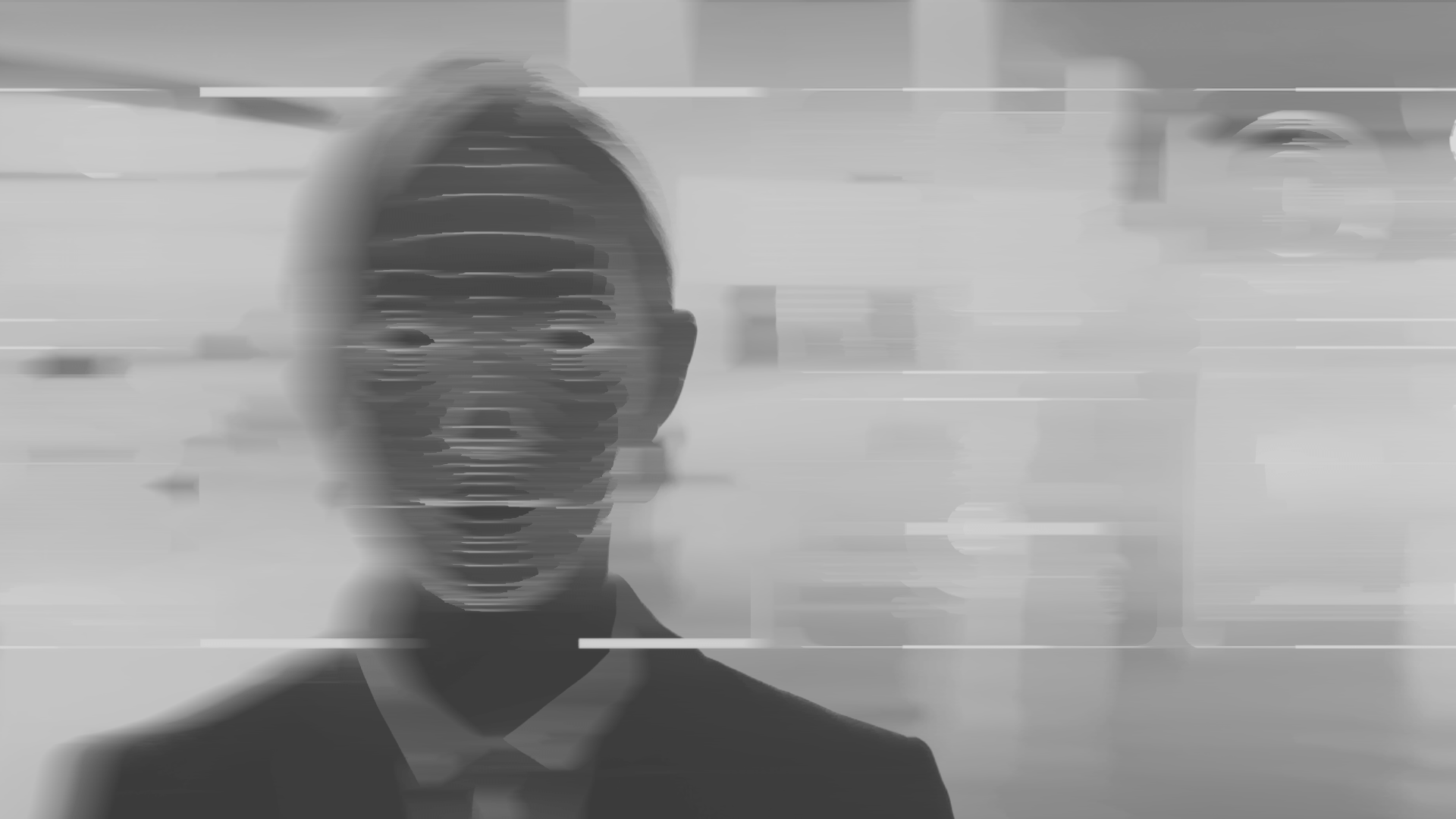
Nowadays, the illustration/representation dichotomy has been blown out by the infestation of synthetic imaging, Large Language Models (LLMs), and other automatically simulated pseudo-events: the image/language doesn’t belong to the body but to a network that develops independently from the associative sensory order. Even expanded identities are being erased, dispersed across a cloud of electronic indistinguishability—and together with them, the representational idea of the real disappears.
There’s no way back. “There are no ruptures—Ireland and Kronic write—and transformations require not an impossible reverse back down the chronological timeline but a counteractualisation into the immanent egg.”7 Either you get Mondrianized or not—Cortázar says. If not, we also know what happens: the source-stimulus becomes a parasymbol: a parasite, a glitch, a pulse of noise. “
“I have nothing to say, and I’m saying it”–confessed John Cage.
The goal of technological development as stated by Viola is reversed. Actually, the same possibility of a teleological objective is excluded. The viewer retreats to shapeless chaos. That different, blindsighted way to interact with abstraction prevents the stimulus from being uploaded to a representational cycle. “Abstraction in itself is the sovereign of the negative determination” —writes Nick Land—“and can never fall under a formal relation. It does not oppose itself to the concrete, except in terms whose keys are encrypted within itself. Apophatic method (the via negativa) is its discipline.”8
Alternatively, assuming that the viewer is “strong enough to let the interesting things that are happening —including to oneself— happen,”9 abstraction-in-itself might get engaged in a generative pathway to be speculatively processed. Speculation leads to the emergence of inhuman discognitive systems — generative cognitors—working their world from non-symbolic elements.
Generative cognitors are semiopathic machines: “the semiopath” —clarifies Steven Craig Hickman— “is a voyeur of signs rather than a creator, a semiotician of the death-drive rather than a desiring machine, a cyberzombie of the edge worlds frozen on the cyberscreens of an endless night of civilization.”10 “Generative” doesn’t mean “creative”, but it refers to a speculative exploration of the physical constraints determining the space of possibilities in a deterritorialized “real”. Generative cognitors (again, human or not) might take advantage of the same technologies developed to share representations—but they use them instead as instruments for producing the illusion of unsharable singularities. As a flâneur of signs, the semiopathic machine is neither misperceiving the world nor trying to convey information at all;11,12 It’s Deleuze and Guattari’s abstract machine of mutation operating by decoding and deterritorialization and drawing the lines of flight: “molar or rigid segments always seal, plug, block the lines of flight, whereas this machine is always making them flow, ‘between’ the rigid segments and in another, submolecular, direction.” 13
The modern (and postmodern) world had been epistemologically trapped in sequential representation loops: knowledge was supposed to be made of accessible, stable, media-sharable models representing reality. Science, art, socio-politics, industry, and common life still rely on the performative (relative) accuracy of representational models. The new, non-representational para-models of un-reality developed by (human or not) generative cognitors are, in contrast, unstable, esoteric, paradoxical, and demonic; aesthetically confusing and ethically ambiguous: they act as ‘epi-rational’ modulators generating de-generation, introducing systemic noise that can’t be set apart from meaning, summoning the xenoerotics of cutified, playful, and terrible bodies without data, and shaking every modern institution and social structure to its foundation.
Paraphrasing Jean Baudrillard, we14 might say that one can see now that the abstract inhumanists, who are accused of disdaining and negating the human, are those who accord it its true value, in contrast with the humanists, who only see reflections in it and are content to venerate a filigree God.
NOTES:
1- Julio Cortázar, Hopscotch, trans. Gregory Rabassa, Pantheon, 1966, 97.
2- Such as Kenji Siratori, John Trefry, Grant Maierhofer, Blake Butler, Logan Berry, David Roden, Mike Corrao, Jake Reber, Louis Armand, Snatch Wylden, Elytron Frass, Andrew Wenaus, Zak Ferguson, just to mention a few.
3- “By reducing the broad experiential impact of technology to its restricted impact on thought, twentieth-century theoretical discourses effectively function to ‘enframe’ technology within a linguistically or semiotically constituted field. In any such frame of reference, technology can only attain a positive ontological status in the form of the machine metaphor, a figure for some (mechanical) operation of thought.” Mark Hansen, Embodying Technesis. Technology Beyond Writing. The University of Michigan Press, 2000, 21.
4-“Perception is not something that happens to us, or in us. It is something we do.” (Alva Noë, Action in Perception, The MIT Press, 2006, 1.
5- “Such would be the successive phases of the image: it is the reflection of a profound reality; it masks and denatures a profound reality; it masks the absence of a profound reality; it has no relation to any reality whatsoever; it is its own pure simulacrum.” (Jean Baudrillard, Simulacra and Simulation. The University of Michigan Press, 1994, 6)
6- Bill Viola, Reasons for Knocking at an Empty House: Writings 1973–1994, The MIT Press, 1995.
7- Amy Ireland and Maya B Kronic, Cute Accelerationism, Urbanomic, 2024, 26.
8- Nick Land, Chasm, Time Spiral Press, 2015, 87.
9- “The role played by the subject in cute/acc is one of active passivity: it’s about being strong enough to let the interesting things that are happening —including to oneself— happen (counterintuitively, you have to be ‘strong’ to do this, because it is always simpler and more acceptable to resist), whereas the collective subject of xenofeminism, just like the promethean subject of left accelerationism, considers itself as being capable of actively imposing a political will on history.” (Clarice Pelotas, Cuteness cares nothing for judgement, and is infuriating to power: Interview with Maya B. Kronic and Amy Ireland, 2024) https://medium.com/@ricec414/cuteness-cares-nothing-for-judgement-and-is-infuriating-to-power-interview-with-maya-b-4c77774c03d2
10- Steven Craig Hickman, Franco Berardi: Panic Society and the Semiopath, The Dark Fantastic: Literature, Philosophy, and Digital Arts, 2013.
11- “Calling [large language models’] mistakes ‘hallucinations’ isn’t harmless: it lends itself to the confusion that the machines are in some way misperceiving but are nonetheless trying to convey something that they believe or have perceived. This, as we’ve argued, is the wrong metaphor. The machines are not trying to communicate something they believe or perceive. Their inaccuracy is not due to misperception or hallucination. As we have pointed out, they are not trying to convey information at all” (Hicks, M.T., Humphries, J. & Slater, J. ChatGPT is bullshit. Ethics and Information Technology. 26, 38 (2024). https://doi.org/10.1007/s10676-024-09775-5)
12- “From an anthropocentric perspective, an encoder error suggests that the part of an AI model responsible for processing and trans-lating input data into a format the model can then understand fails to accurately represent this new, additional data. As such, the AI produces erroneous results. However, if we conceptualize error as indicative of the magic site—the intrusion of the hiddenness of the world into our own—these aesthetic glitches and misrepresen-tations of data become examples of communication with an inhu-man intelligence and, in the case of AI image generators, represen-tations of a machinic aesthetic sensibility.” (Emily Martin, AI as Conduit: Digital Séance and the Revelation of Inhuman Intelligence in Latent Space, Plutonics XVII, 2024, 41-66.)
13- Gilles Deleuze and Félix Guattari, A Thousand Plateaus, 1980, trans. B. Massumi, University of Minnesota Press, 1987, 223.
14- Jean Baudrillard, op cit., 5.
 :: DIFFRACTIONS ::