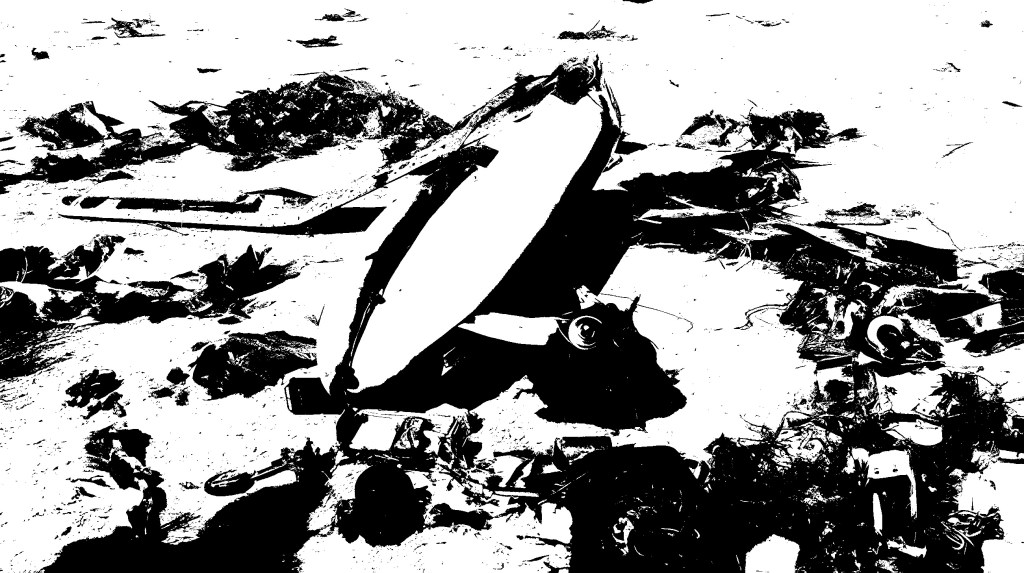
During the 2020 Nagorno-Karabakh war, Azerbaijan inflicted a huge defeat on Armenia. With regard to the military action, the international media quickly became aware of the key role played by Israeli and Turkish-made drones operated by the Azeri forces. It has now become a consensus in military science that the widespread and coordinated use of drones greatly contributed to Azerbaijan’s swift victory. With the help of these weapons, the latter managed to paralyze the Armenian air defense systems in the first days of the conflict, weakening the opponent, which was already in a less advantageous economic position and mostly had merely outdated Soviet-era weaponry.1 Although in general conflicts in mountainous regions are usually unfavorable for the aggressor, the Azeri army managed to carry out an exemplary, blitzkrieg-like offensive, without the Armenian air defenses being able to significantly hinder the activities of the Azerbaijani Air Force.
In addition, the Turkish-made (and, according to certain unverified assumptions, remote-controlled by Turkish personnel) Bayraktat TB2 drones serving in the Azerbaijani Air Force caused significant tank losses to the Armenian and Nagorno-Karabakh separatist troops, but the enemy’s troops were also significantly demoralized by the widespread use of the Israeli kamikaze drone Harop, a circumstance which has caused an internal political scandals in Israel.2 The war ended with a catastrophic Armenian defeat and significant territorial concessions, further cemented in a subsequent border conflict in 2023, ending in yet another Azeri victory and the complete annexation (or restitution, depending on one’s stance) of Nagorno-Karabakh by Azerbaijan.
The lack of anti-drone Electronic Warfare (EW) technologies resulted in heavy casualties to Armenian troops. It is no exaggeration to say that the 2020 Nagorno-Karabakh war will be mentioned as a significant military historical moment in future history books. But what is the socio-philosophical significance of this geopolitical and military history event, which is relatively distant for us here in Central Europe? What does the drone mean, and how can we think about this prominent military technology?

In outlining the nature of technological entities, we can hardly rely on facts alone. The task of philosophy is primarily to think further, and not only to represent events as they happened in a historical sense. Thus, starting from the real event, we must arrive at the intuition of how a virtuality actualized in the event. The Nagorno-Karabakh War of 2020 may be described in retrospect as the Drone Caesura, DC, indicating the historical moment when the drone as a military technology becomes an actual, i.e., decisive geopolitical power factor. This assumption is justified by the fact that although drones have been used for decades by advanced forces such as the United States Air Force, they played more of an episodic attack and reconnaissance function.
Differently put, there was no previous war in which the drone played such a singular role as the 2020 Nagorno-Karabakh conflict. DC-2020 is the point where the drone becomes an autonomous power actor in its own right, that is, the central element of a complete “war machine”. The novelty of this development is difficult to exaggerate. The machine itself is undoubtedly novel, and in fact, it indicates a distinctly posthumanist direction in the demotion of the human pilot to the status of remote control. However, the development itself is not new at all, only its concrete technological manifestation can be considered novel.
To understand the relationship between war and technology, it is essential to refer to the concept of “dromocracy” by philosopher of technology Paul Virilio. According to Virilio’s provocative thesis, beneath politics and other ideological rhetoric, we may discover the pure intensity of technology accelerating itself. Instead of politics, we can talk about “speed” in modernity, which is dominating society as a whole as an increasingly uncontrollable tendency.3 Geographical differences fade under the influence of alternating orders of velocity. Although, according to Virilio, every society is “dromocratic” to a greater or lesser extent, in the sense that the prevailing form of the time has a privileged relationship with the cutting-edge technologies of each era, in modernity a “dromocratic revolution” takes place, which confers power on “acceleration in itself.”4
We are definitely not dealing here with an instrumental conception of technology, since in Virilio’s view, technological modes of being are uncontrollable and reshape society in their own image. Even if we treat it as a remote-controlled device, each technology has some kind of surplus as compared to human presence. Virilio’s term, “dromocracy,” derives from the Greek word “dromos” (δρόμος), i.e., “competition,” denoting speed that has become an end in itself. Domocracy is no longer in the hands of humans – rather, we merely respond passively to the demands that are placed on us by the rapidly changing technologies.5 Whether we accept Virilio’s fatalism or not, it seems plausible to assume that the empirically demonstrable acceleration of technological development has important geographical and, consequently, geopolitical implications. Vital space gives way to an undifferentiated, uniform, homogeneous and flat space.6 In dromocracy, space is reformatted and homogenized into a grid.
Let us recall what happened in the 2020 Nagorno-Karabakh war theater: the mountainous defensive force, which ought to have had an advantage under previous strategic paradigms, was defeated by an attacking army. Not only did Armenian air defenses fall victim to drone attacks, but hundreds of Armenian tanks were also destroyed en masse by Azeri drones. The incorporation of a new rapid strike technology has upset the ground strategic consensus that prefers mountain defense on the one hand and considers the tank as a central factor on the other. According to some specialists, the days of armored vehicles in warfare are “numbered.”7 What happened?
According to Virilio’s “dromological” conception of history, the entirety of human history can be rewritten as an evolutionary process of the increasing interdependence of different orders of velocity. The appearance of the tank in World War I was not enough in itself to completely change warfare: like drones used only to a small extent by the US Air Force, the tank at this stage (being a stand-alone weapon) did not bring about a decisive change because it was not fast enough and did not form part of a strategic ensemble or technological-organizational assemblage. It became of strategic importance however as soon as it was integrated into a broader arrangement, i.e. after being properly integrated into the strategic approach of the German General Staff. With the birth of blitzkrieg tactics during World War II, the tank as an acceleration technology could fulfill what can be called its “deterritorialization potential,” to borrow the phraseaology of philosophers Gilles Deleuze and Félix Guattari.
Under “deterritorialization” we may understand any loosening of territorial bonds, be it a deviation from a linguistic code, a mass migration, or, as in this case, increased strategic flexibility introduced by a new military technology. 1939/1940 constitutes the Birth of the Tank: the blitzkrieg is unleashed by the German National Socialist regime onto Poland, then subsequently France and the Benelux countries, exploiting to the utmost the strategic opportunities afforded by the tank. This is the real opening of the tank era. The fixed World War I fighting style, replete with trenches and fortifications is over. 2020 constitutes the Birth of the Drone, the year of “DC” (Dronocracy) which shall be a staple of future military history, marking the transformation of the drone into a strategic factor. Simultaneously, 2020 was the “final” year of the tank, which is less multivalent (as compared with the drone), more limited in its movements, and will soon become obsolete due to its relative inflexibility. But how does a technology integrate into the larger structure in which it finds utilization? And what is it that technology integrated into?
:: :: :: :: :: :: :: :: :: :: :: :: :: :: :: :: :: :: :: :: :: :: :: :: :: :: :: :: :: :: :: :: :: :: :: :: :: :: :: :::: :: :: :: :: :: :: ::
We have already referred to the term “assemblage” from Deleuze and Guattari, but we have still to show which assemblage is the one into which strategic integration takes place. An assemblage may be considered a complex being, the nature of which changes substantially with the incorporation of one or more new important elements.8 The integration of essential elements results in a dimensional or scale shift in the system. In relation to war, we can speak of “war machines”, but according to Deleuze and Guattari, it is important to see that a war machine cannot be subordinated to the state.
Referring to the history of the Mongols and other nomadic peoples, the authors believe, contrary to Carl von Clausewitz’s classic formulation that “war is the continuation of politics by other means”, that we can rightly talk about the possibility of “pure war” that can be separated from the state.9 Clausewitz himself accounts for the possibility of “pure war” that can be separated from the will of the sovereign of the state, but the German author intends this only as an abstraction: although war has its own essence, in reality it is necessarily subordinated to the goals of one or more state actors – hence no war without politics.
With the thesis of a “war machine” that can be separated from the state, Deleuze and Guattari represent in Julian Reid’s view a fundamentally Nietzschean conception of war, which opposes pure war to any concentration of power.10 It is not a question of the state creating war for its own ends: war is always present outside the state from the outset.11 War is a social condition that averts and keeps the State at bay. In fact, the war machine is also the systemic prevention of subjectification as such.12 Viewed in such a light, the “war machine” does not coincide with the totality of institutionalized, state-controlled combat formations. Rather, the war machine is a virtuality that is present everywhere when war factors and “flows” subordinated to the state testify to some kind of resistance.13 Technology is no exception.
:: :: :: :: :: :: :: :: :: :: :: :: :: :: :: :: :: :: :: :: :: :: :: :: :: :: :: :: :: :: :: :: :: :: :: :: :: :: :: :::: :: :: :: :: :: :: ::
In contrast to the state, which has a fixed (territorializing and reterritorializing) relationship with space, the goal of “nomads” operating “war machines” is primarily to create and maintain a “smooth”, i.e., flattened and homogeneous space.14 War machines and combat arrangements tending towards “pure war” free of political goals, displaying a much more dynamic attitude to territoriality than static states. However, war-making is not necessarily the goal of the war machine: according to the speculative philosophy of history advanced by Deleuze and Guattari, this mode of organization becomes a subsystem exemplifying a specific war function only when it is integrated under a State.
We know of countless cases wherein empires have integrated nomadic formations in their armies. It may easily seem that Deleuze and Guattari are idealizing the “war machine” or romanticizing a former, lawless nomadic martial way of life. Despite appearances to the contrary, Deleuze and Guattari refrain from idealizing Michael Kohlhaas, Genghis Khan or the Japanese samurai. Still, the history of war machines can give us hope that life outside the state is possible. From the point of view of their own radical anarchist project, Deleuze and Guattari’s attraction to nomads is understandable, but there is more to it than mere nostalgia.
In the narrative about the “nomadology” of war machines, technologies and the way they are integrated into deliberately constructed networks play a key role. Take, for example, the example of the steppe horseback archer. Bows have been known to humankind for a very long time. Similarly, horses have been bred by homo sapiens for thousands of years. The nomadic “war machine” of the steppe however integrated this technology into a new, autonomous arrangement, where human, horse, and bow unite, in a strategically coordinated way.15 As distinct from an accident or a weather pattern, an assemblage is a complex, albeit “deliberate,” and hence strategic, construct.16
:: :: :: :: :: :: :: :: :: :: :: :: :: :: :: :: :: :: :: :: :: :: :: :: :: :: :: :: :: :: :: :: :: :: :: :: :: :: :: :::: :: :: :: :: :: :: ::
In a sense, the history of war machines and states is “coexistent”. In contrast to Paul Patton, however, it should be noted that this is far from being an “anti-evolutionary” position on the part of Deleuze and Guattari.17 On the contrary, one of the most types of evolutionary explanation is that which recognizes the possibility of emergence. Singular events are a decisive turning points, when technologies – combined with existing procedures, practices, traditions and users – transform the way things are done. Another example, cited by Deleuze and Guattari, the steel sabre, also supports the importance of emergence in the history of war machines. As long as it was confined to the territory of the Chinese Empire, within the framework of a settled culture that preferred heavier weaponry, its inherent strategic potential could not be realized.
In order for the steel saber to develop into a revolutionary innovation, it was necessary for the Scythians to adopt and integrate this technology into their own cavalry fighting style.18 By successfully adapting a Chinese weapon, the Scythians created a “machine tribe” (phylum machinique) that could be mapped later. We may describe this as a “machinic or technological lineage,” when a series of operations bring together elements that were originally distant and distinct from one other.19
:: :: :: :: :: :: :: :: :: :: :: :: :: :: :: :: :: :: :: :: :: :: :: :: :: :: :: :: :: :: :: :: :: :: :: :: :: :: :: :::: :: :: :: :: :: :: ::
A fortunate coincidence of singularities is necessary for the maximum utilization of technological entities. Referring back to the contemporary example, the drone in itself does not entail a military revolution. The decisive caesura arrived in the moment when a regime flush oil wealth and awaiting revenge (Azerbaijan), a territorial dispute arising from socio-cultural insecurity, a mountainous landscape waiting to be flattened, and, finally, a new technology, all came together. The drone comes in handy for all those actors who, like nomads, seek to make space permeable. As Benjamin Noys points out, the essence of drone technology is “smoothness”, not only in terms of spatiality, but also in the sense of “undisturbed” operations: human and technical work together to execute the kill-chain smoothly.20
The operational sequence is successful if all targets are eliminated. According to reports on the ground, Azeri drones only targeted human soldiers when they ran out of “valuable” targets, i.e. all enemy military hardware, be it tanks or radars, had already been eliminated.21 The degradation of the status of the human becomes truly limitless in an age of technologically mediated speed, wherein human beings are not economically valuable enough to even be killed.
1. https://www.csis.org/analysis/air-and-missile-war-nagorno-karabakh-lessons-future-strike-and-defense
2.https://www.forbes.com/sites/davidhambling/2020/11/10/the-magic-bullet-drones-behind–azerbaijans-victory-over-armenia/?sh=4fcb1ca35e57; https://www.jpost.com/middle-east/israeli-drones-in-azerbaijan-raise-questions-on-use-in-the-battlefied-644161
3. Paul VIRILIO: Speed and Politics, tr. Marc Polizzotti, Semiotext(e), Los Angeles, 2006, 69.
4. Paul VIRILIO: Pure War, tr. Marc Polizzotti, Brian O’Keeffe, Semiotext(e), Los Angeles, 1998, 59.
5. Paul VIRILIO: Pure War, 71
6. VIRILIO, Speed and Politics, 133
7. https://www.businessinsider.com/drones-in-armenia-azerbaijan-war-raises-doubt-about-tanks-future-2020-11
8. DELEUZE, Gilles and Félix GUATTARI: A Thousand Plateaus. Capitalism and Schizophrenia Vol. II. tr. Brian Massumi, University of Minnesota Press, Minneapolis and London, 1987, 8.
9. 355.
10. REID, Julian: “Deleuze’s War Machine: Nomadism Against the State”, Millennium 32.1 (2003): 57-85.
11. DELEUZE and GUATTARI, A Thousand Plateaus, 357.
12. PELBART, Peter Pál „Subjectification, Desubjectification, Assemblages”, in: ASSIS, Paulo De and GIUDICI, Paolo (eds. 2021) Machinic Assemblages of Desire: Deleuze and Artistic Research 3., 351-361., 354.
13. DELEUZE and GUATTARI, A Thousand Plateaus, 360.
14. ibid., 409-410.
15. ibid., 391.
16. BUCHANAN, Ian. “Assemblage theory and its discontents.” Deleuze Studies 9.3 (2015): 382-392., 387.
17. PATTON, Paul: “Conceptual Politics and the War-Machine in Mille Plateaux”, SubStance 13.3/4 (1984): 61-80., 68.
18. DELEUZE and GUATTARI, A Thousand Plateaus: 404-6.
19. ibid., 406.
20. NOYS, Benjamin: „Drone Metaphysics”, Culture Machine 16, 1-22., 17.
21.https://www.forbes.com/sites/davidhambling/2020/11/10/the-magic-bullet-drones-behind–azerbaijans-victory-over-armenia/?sh=31abc9115e57
 :: DIFFRACTIONS ::