
Excerpt from Xenology (tilde press, 2025) by Vít Bohal
For a full PDF of the book, please visit tilde press at tilde press website. | Tilde press Instagram
Xenoplanetarity consists in the labor of inhuman rationality in its engagement with social construction at a planetary scale. Its theoretical practice then consists in excavating the myriad manifestations and choreographies of planetary hospitality as they currently exist, while at the same time assuming an engaged, response-able (re)construction of the concept of the human which such an endeavor entails. The former aims to put in focus the specular, imaginary totality of the planet in relation to the actual social discourses which structure its various practices, while the latter shifts the focus from a prescriptive ideology of universality to the practical negotiation of its lived conditions now and into the future.
In her 1997 lecture “Imperative to Re-Imagine the Planet,” Gayatri Chakravorty Spivak defined planetarity as an irreducible register of politics operating at planetary scale in the postcolonial situation. Spivak gave her original lecture at the Stiftung Dialogik in Zurich, framing her position of planetarity within the particular context of 1990s Swiss immigration. She developed her politics of the stranger as a theory of planetary sociality in which the diverse, more-than-humanist, planetary existences assume a necessary ethics of alterity.
Spivak bases this constant reflection and generation of cultural and social difference on a universal acknowledgment that “the ‘planet’ [is] a catachresis for inscribing collective responsibility as right,” and that it is also the “imagined proper receiver and transmitter of imperatives.” [1] Spivak here is however careful not to speak for any realist notion that the geological planet itself is a source of commitment and destiny, but rather that the “imagined” virtuality of the planet also assumes a particular form of speculation and political negotiation. Her planetary ethics is in this sense similar to Negarestani’s inhuman rationality predicated on a “commitment” to humanity and the acknowledgment of the human as a planetary force, without however universalizing or naturalizing any of its synchronic or particular expressions.
She notably sees this logic of difference as irreducible – meaning as a perennial negotiation, never to be completed, neither in the present nor future. It is in this sense that Spivak espouses a synthetic and artificial practice based in the hard labor of politics, one which explicitly resituates, repurposes and reconstructs the distribution and significance of the shared category of “humanity” as much as that of “the planet.”
Such a political frame can be said to exist avant la lettre without making itself a hegemony, and planetarity in this sense ungrounds the futurological proclivity to monohumanist enclosure or any final solution to the ‘problem’ of sociality as seen from the perspective of various imperial monohumanisms. Spivak argues that although “alterity” is its integral principle, planetarity as such remains “mysterious and discontinuous – an experience of the impossible.” [2] The political experience of planetarity is ever mutable and in constant flux – from the speeds and tempos of the voracious acceleration of human extractivist and connective projects as much as the slow, glacial pace of geological and planetary dynamics which have inscribed themselves on the palimpsest of the human and its politics. The planet seen through the prism of planetarity can never be a particular vessel for the universal, but is rather a site for synthetic politics – a medium in the proper sense (i.e. an environment) which assumes the process of synthetic becomingas a basic structuring principle.
We will follow Spivak’s line of inquiry, but in order to better construct what the notion of xenoplanetarity may entail, both in theory and practice, we must first define her vision of planetarity negatively, i.e. against that which it is not: that is multiculturalism and globalism.
For Spivak speaking in 1997, multiculturalism provided a concept against which she also defined her theory of planetarity. The politics of multiculturalism aimed to provide an alternative to ethnic nationalism through a logic of sociocultural placation bound by a federative mandate and its attendant universalism. Multiculturalist politics were aiming to integrate the alterity in the form of an identitarian patchwork within the legal, territorial, and social fold of a given state. Spivak did not see it as panacea of intercultural relations, a sort of sociopolitical “end of history,” but rather (quite rightly) considered it a particular solution to a particular problem of governance.
For Spivak, ‘multiculturalism’ is a paleonym – “a name with a history.” She speaks particularly about the Swiss context and “Europe,” but in the context of political practice (for example, in its historical adoption by the government of P.–E. Trudeau in Canada throughout the 1970s and 80s) she considered it as an effect of particular conditions and particular governmental needs. Spivak remains critical of the multiculturalist project as a general systemics for dealing with alterity, because it does not properly engage with the diverse displaced diasporas on mutual grounds. In order to be able to move outside of the imaginarium of the West as “the giver – of hospitality, or neighborly love,” it is necessary to give these concepts “a proper name within a planetary graphic, not within a continental metonymy.”[3]
Spivak also criticized multiculturalism for often promulgating unproductive, culturally contingent practices over reasonable ones. While she acquiesces that “multiculturalism performs a critique, however inchoate, of the limits of the rational structures of civil society,”[4] in its provision to retain the plurality of voices within the political envelope of a given territory, Spivak sees that multiculturalism runs the risk of protecting and promulgating “unreasonable cultural practices as a sign of freedom.”[5] Against this ‘separate but equal’ model she proposes multifaceted political engagement, noting the necessity of interchange and mutual integration among the various actors of the polis, as well as the shared negotiation and construction of the limits of what a civil society might be. She frames planetarity as a political idiom which consists in “intending without guarantees,” and which must be “urged on both sides”[6] of the divide – rather than adopting the mandate of federalist separation, Spivak urges a symmetrical and pluralist engagement which would aim to construct a new and synthetic social space among the internal actors and communities of a given state.

This productive civic engagement has two effects: on the one hand, it reclaims the alienation of the ‘foreign’ or strange subject insofar as it frees it from the traditional position of ‘the white man’s burden’ of which Spivak is so critical; [7] but it simultaneously brings Spivak to the crux of her argument for the mutuality and symmetricality of the immigrant and the landed inhabitants: “I suggest that we have something to learn from the underclass of immigrants, in the interest of a more just modernity”[8] – in this way, she argues for the productive potential which alterity can bring to the West. Concretely speaking, she finds this lesson brought by the immigrant as consisting in the “remnants of a responsible pragma”[9] which can be gleaned from their imported nonuniversalist, and assumedly precapitalist epistemologies – what the immigrant can bring is also the echo of the potentially pragmatic forms of sociality and praxis which may have been present before the impositions of Western coloniality and capitalism.
Here I would disagree with Spivak on her assumption that the immigrant is the carrier of their own brand of premodern knowledge and pragmatic sociality, as such cultural relativism shows us that these topical knowledges may be xenophobic and bigoted (i.e. the “unreasonable cultural practices as a sign of freedom”). It is rather that the very process of immigration overwrites an immigrant’s specular ambassadorship of any chthonic or originary cultural position. We can rather say that the immigrant always brings with her the cultural experience of immigration itself as an experience of relative alienation. This xenopolitics of the stranger may be more beneficial than attempting to mine an oftentimes imaginary cultural memetics, and provides a basis for practices which may enrich the habituated proceduralities of the given locale and can engage with the contemporary frame of alienation as, for example, in the context of Krzysztof Wodiczko’s “cities that are already fully built”.[10]
Such pragmatics of the stranger are, however, not to be necessarily incorporated into the mosaic of the community or city as mere continuation of neoliberal economics and marketing strategy, but ought to extend to the level of civic society in which the intricacies of cohabitation and mutuality are negotiated beyond the mandate of the market. An immigrant thus cannot be intersectionally interpellated as solely an economic actor but also a social, cultural, and political one.
Spivak calls this fundamental aspect of social interaction with the foreign ‘responsibility’: The “developed postcapitalist structure must once again be filled with the more robust imperative to responsibility which capitalist social productivity was obliged to destroy.”[11] Spivak furthermore considers such mutual responsibility to be a fundamental right insofar as it is a species characteristic, the social mode of humanity as such: “civility requires your practice of responsibility as a pre-originary right.”[12] It is in this sense that Spivak’s vision of planetarity dissolves the firm contours of state-supported ‘multicultural policy’ or ‘politics of immigration’ in favor of cultivating a more symmetrical and nonprivileged idiom of interaction among the (un)homely. Such a form of interaction based in the various alienations of the intersectional condition then ought to be based in a mutual exchange (or “response-ability” in the sense of Donna Haraway). It assumes a rational commitment to the idea of a synthetic humanity while accepting alienation as inherent in any contemporary social construction. It is here that alienation is taken as a productive condition.
Where multiculturalism positions itself as a sociopolitical solution to planetary kinetics, globalism aims to be a technoeconomic one. Globalization details the planet as ‘the globe’ – that is a metaphorical model which smooths the surface of the planet along the creases and flows of international exchange, logistics, and finance. Spivak considers globalization as “the imposition of the same system of exchange everywhere,”[13] and globalization can in this sense be said to impose a monetary and logistical matrix which levels difference and subsumes an increasing number of relations and items to the maxim of market value. Globalization constitutes the smoothing and expansion of systems and infrastructures of exchange across the planet in which “the globe” is cast as the idealized metaphor of smooth space networked through the flow of capital.[14]

Speaking historically, the globe for Spivak is a concept which starts developing through the “discovery” of the surface of the planet during the modern Era of Discovery, and remains implicated in the politics of colonization and imperial projection. The legacy of Afro-American slavery and the Atlantic Triangular trade, or the politics of various joint-stock companies extracting and shipping goods from the Indies to Europe (i.e. The East India Company, the Dutch East India Company, etc.) provide a particular history and matrix of nautical shipping, colonial resource extraction and asymmetrical exchange. Spivak then assumes the idea of globalism as building on this historical model and sees globalism as a continuation of its historical practices which make up an integral part of western economic ideology up until today.
But apart from the logistical and economic aspects of globalism, it is interesting for the contemporary reader to see Spivak consider cybernetic apparatuses and computational infrastructures as always-already implicated in a similar logic of equalization and domination within the wider project of globalization. For Spivak, the advancing computerization and the age of communication developing in the 1990s constituted a technological project collusive with economic and semiotic imperialism, or the mandate of what she calls “electronic capital.”
It is not too fanciful to say, in the gridwork of electronic capital, we achieve something that resembles the abstract ball covered in latitudes and longitudes, cut by virtual lines, once the equator and the tropics, now drawn increasingly by other requirements –imperatives?– of Geographical Information Systems.[15]
Beyond her purely political and discursive analysis focused on the ethical and pragmatic “imperatives,” we find an inchoate theory which engages computation with the geological substrate of the planet. Apart from the rational question on the requirements and imperatives of computational architectures, or what Spivak calls “Geographical Information Systems,” her critique provides an early prefiguration of what Benjamin Bratton has more recently framed as “planetary-scaled computation”[16] – meaning a theory for addressing the vast assemblage of material objects, resources, communication lines, procedures and processes, human input, and their (always fraught) standardization protocols. Bratton theorizes this multilayered concept of the currently developing technological milieu through the model of ‘the Stack.’ The allegory of The Stack also engages with the planetary scale through its formulation of the empirical dynamics of the developing techno-sphere – but where Bratton speculates on the current dispositions and affordances which this new infrastructure provides, Spivak’s critique from the 1990s remains critical to the computational and communicational infrastructure developing at her time. From the perspective of poststructuralist and postcolonial discursive analysis, she sees it as a manifestation of informational equivalency and a driver of global universalism.
Spivak famously wrote: “The globe is on our computers. No one lives there,”[17] – in this statement we see her perhaps too easily linking the complex dynamics of computerization with the smooth operations of globalist capital which bypass the lived experience of the planet. Economic and computational globalization do not necessarily work hand in hand, and their logics and modes of reproduction have not always been aligned. Although the developing techno-sphere indeed has, in a certain sense, levelled differences across the planet, it has never fully subsumed them under any mono-technological mandate and has rather come to generate its own spectrum of factions and splinterings, as well as its own propensity for generating difference through new tools and protocols.
Although we can indeed agree with Spivak that “the globe is on our computers,” it is not all that is there. The assertion that “no-one lives there” has, in the post-internet era, become difficult to maintain due to the ever-increasing permeability between ‘real life’ and the virtual ‘world’ on our screens, which has become ever more detailed, granular, and reflective of the actual.
The saturation of internet coverage and accessibility have shown the exceeding interoperability of the real and the virtual and have made any threshold between them more permeable than ever before. Approaching the techno-sphere from the perspective of planetary-scale computation shows it to be palimpsestic and technologically balkanized across various hardware platforms, state policies, languages, platformed gatekeepers, and various distributions of access. These are shown to be, first and foremost, determined by human political, economic and social actors who design, develop, consume and maintain them while at the same time being incontrovertibly engaged with the geological, mineral, chemical, and even atmospheric materiality of the planet.
What to Spivak seemed like a leveling of power relations carried by American Silicon Valley capital has, since her writing, developed into a vast assemblage of computational infrastructures and superstructures which remain engaged with the human practices of the world, and whose difference can also be identified along the fault lines of contemporary social politics and geopolitics.
Spivak then presents her notion of “planetarity” as an alternative to multiculturalism and globalism. In her original 1997 lecture, she defines it as a manifest and irreducible sociality reflective of the indigenous existences of the planet, defining it as the “mysterious and discontinuous” reality of the planet. She presents it as a form of political perspectivism which remains open to reflecting the vantage points of the planet’s myriad eyes – a sociopolitical “experience of the impossible.”

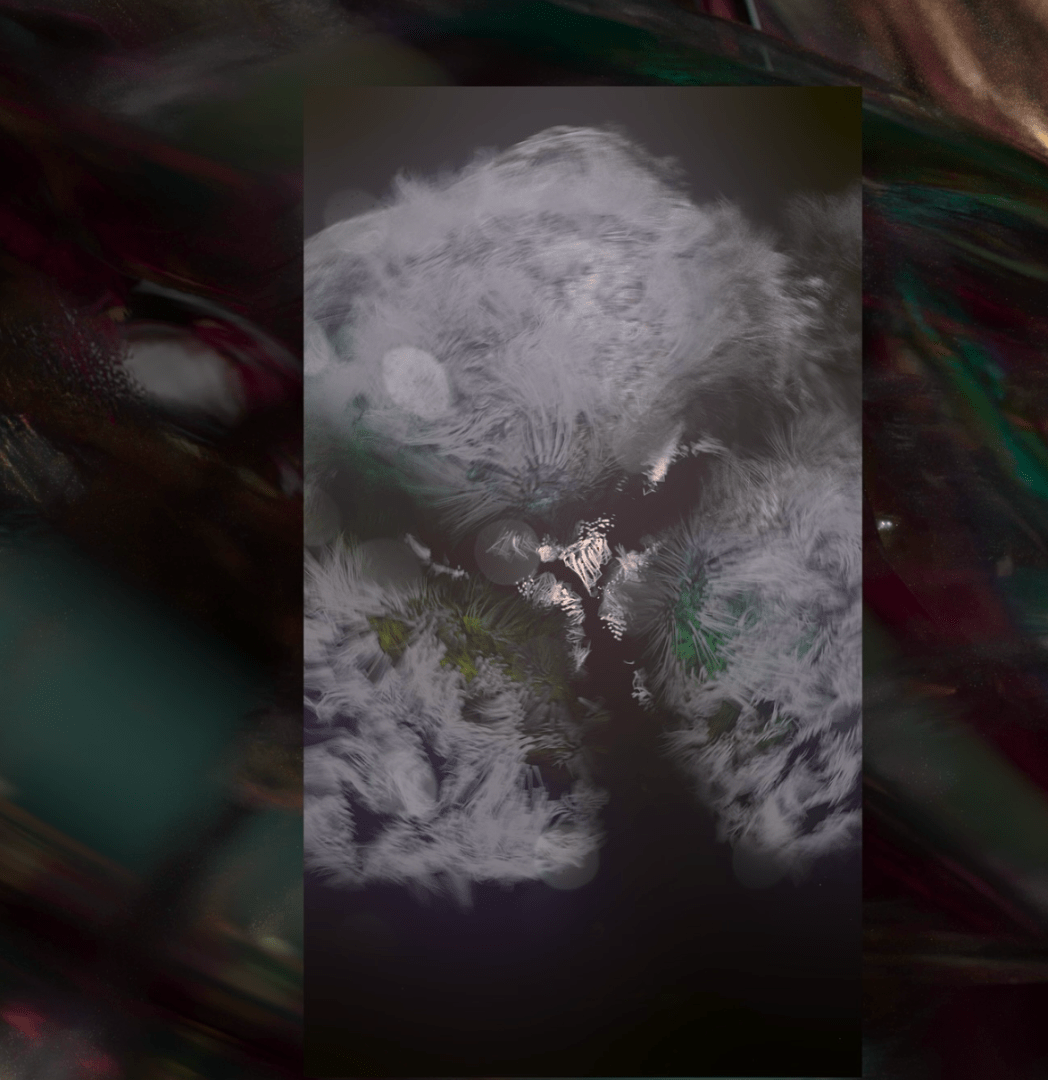
Lukáš Prokop, IG:h5io6i54k. IᗰᑭᗩᑕT ᔕITE ᑕYTOᑭᔕY. A still from his sequel (of sorts) to his short film Concomitant Outgrowth Event.
The realization and becoming conscious of the material existence of our planet does not transparently assume a smoothing of difference. In her 2015 reflection on her original 1997 lecture entitled “‘Planetarity’ (Box 4, WELT),” Spivak expands on the necessity and integrality of political difference and fragmentation:
“If we think dogmatically […] of ‘planetarity’ as contained under another, prior concept of the object (the ‘planet’), which constitutes a principle of reason, and then determine it in conformity with this, we come up with contemporary planet-talk by way of environmentalism, referring, usually, but not invariably, to an undivided ‘natural’ space rather than a differentiated political space. This smoothly ‘translates’ into the interest of globalization in the mode of the abstract as such. […] My use of ‘planetarity,’ on the other hand, does not refer to any applicable methodology. It is different from a sense of being the custodians of our very own planet” […].[18]
Here Spivak argues against a form of reason as a possible structuring principle of the social register of planetarity. What Spivak terms “contemporary planet-talk” allegedly construes the planet as a physical site with its own particular, nonhuman feedback mechanisms whose generation and promulgation she considers to be subsumed under the imperial-academic complex. In her original call for planetarity, Spivak instead aimed to “overwrite” this globalist logic eliminative of the social register, stating that “The planet is in the species of alterity, belonging to another system; and yet we inhabit it, indeed are it.”[19] And although the discourse of planetarity remains well aware of the findings of contemporary natural sciences (for example in drawing attention to ongoing environmental degradation, climate change and loss of biodiversity), it works rather on the level of social signification and its capacity for generating multitudes and difference.
Is there then a way to redeem reason from the monohumanism of the imperial projects of the past without discarding it in toto? And can an inhuman, synthetic reason perhaps come to provide a vector for navigating the postcolonial situation while providing the means for decolonial and posthuman practices?
Jennifer Gabrys writes that “The planetary can be a different figure for undoing the totality of globes and globality. Rather than bringing the Earth into view as a total object […] the planetary remains that which cannot be fixed or settled.”[20] Once regarded through the eyes of inhuman rationality, Spivak’s early vision of the planetary as commensurate with alterity fosters a model of cultural perspectivism which understands alternative views and visions as necessarily relevant and structurally engaging. By invoking her method of “practical dialogics,” or the symmetrical exchange between actors, Spivak’s planetarity originally aimed to “[keep] in play multiple modes of human inhabitation without having to resolve or synthesize these, or to render them within a relation of domination or subjugation.”[21] It only follows that the inhuman navigation of the significance and significations of ‘humanity’ as an open-ended project provides an integral modus operandi for Spivak’s theory of planetarity.
In order to avoid the lapsing of the planetary register into becoming merely “a spatial scale of capitalism in cahoots with the neoliberal state,”[22] Jeremy Bendik-Keymer argues for the need of “relational reason.”[23] This would be a practice of reason which would develop the necessity of the intersocial and provide a way to remain honest to the pragmatics of inhuman relationships within the wider planetary situation. Such a situation consists in advancing climate change and the often eminently destructive transformation of its ecology.
In line with the inhuman ethics of Reza Negarestani, one can assume this constant reconstruction of the human as a ‘game of humanity’ which everywhere engages with the more-than-human world. Language and politics matter in this endeavor, and although the rules are constantly shifting at various tempos, the planetary situation is also made legible through the negotiations of an inhuman rationality. Such an endeavor inches towards the space of xenoplanetarity, which consists in the practice of a viable inhuman ethic for a turbulent world of anthropogenic transformation.
Bendik-Keymer importantly notes that “the planetary is not something one can grasp for others,”[24] fundamentally drawing on the situatedness of any enunciation. Planetarity is firm in retaining a sense for the integral alterity of social constructions, with their own particular conditions and affordances. As a central aspect for this thesis on the xeno, such conditions are found in their shared, ubiquitous fall into alienation. As shown by intersectional analysis, the limits of such inhuman enunciation in the present conditions of a technically saturated Earth are not set in stone – they become variously granular, bleed into one another, generate and erase one another; their contours are not molar and blockish but rather shimmer and grow from and through each other. It is here that xenoplanetarity posits that others’ positions are always closer than they appear, already engaging with an ‘us’ even before a subject becomes conscious of such an exchange.
Following its investment into the xeno, xenoplanetarity wagers that the imperatives of the planet are ethical and social in their nature, and fundamentally tied to the experience and the paradoxical intimacy of alienation. Where ‘the globe’ levels culture and society in order to reduce it and make it legible to economic extraction, an ‘alien planet’ rather actively accounts for the persistent remainder of cohabitation, an synthetic ethic of being-with between the fraught concept of ‘humanity’ and its ever-expanding horizon of the more-than-human. This is the space of inhumanism.
Such a frame is however careful to never assume a final solution to the question of the foreigner and works against any form of ritual scapegoating which may make the contours of alienation harder and, paradoxically, easier to process and manipulate at vast scales. On an alien planet, there is always a remainder to signification. And here lies the difference between Spivak’s planetarity and the framing of a xenoplanetary politics: where the former considers the “principle of reason” to be integrally collusive with powers of coloniality and extraction, the former assumes it as a vector for a potentially productive inhuman reasoning – one which is progressively artificial and alienating but which remains predicated on the commitment to the potentially fading (but never lost) concept of ‘humanity.’
Xenoplanetarity looks from the vantage point of the post-humanities in order to better integrate the particular kinetics of humanity within a new, alien, and planetary register. It in this sense reflects the factual, empirical diversity while retaining the fundamental position of reason by engaging in what Robert Brandom has called ‘the game of giving and asking for reasons.’ This is perhaps the promise of a (xeno) planetarity which would be an integrally “transversal” project and which would engage the experience of our only recently discovered “planet” while always keeping in mind the non-reducibility of the lived worlds which transpire upon it. It is in this way that planetarity can become integrated in the hard work of politics as a discourse on the problematic imperatives enmeshed with the complexities of the social world.
Spivak’s original conception of planetarity in this sense opens the door to an inhuman and strategic anthropocentrism which may prove to be a viable mode of moving forward into an ever more precarious and alienated future.
REFERENCES
1. Spivak, An Aesthetic Education in the Era of Globalization, 343
2. Spivak, An Aesthetic Education in the Era of Globalization, 341.
3. Spivak, An Aesthetic Education in the Era of Globalization, 349.
4. Spivak, An Aesthetic Education in the Era of Globalization, 340.
5. Spivak, An Aesthetic Education in the Era of Globalization, 340.
6. Spivak, An Aesthetic Education in the Era of Globalization, 340.
7. I.e. the fetishistic mindset first explicitly expressed in Rudyard Kipling’s poem “The White Man’s Burden” (1899) which simultaneously invokes messianism, western exceptionalism, supported by pathological strain of willful ignorance to present and agential social conditions.
8. Spivak, An Aesthetic Education in the Era of Globalization, 347.
9. Spivak, An Aesthetic Education in the Era of Globalization, 347.
10. Krzysztof Wodiczko, Critical Vehicles: Writings, Projects, Interviews (Massachusetts Institute of Technology, 1999), 6.
11. Spivak, An Aesthetic Education in the Era of Globalization, 346.
12. Spivak, An Aesthetic Education in the Era of Globalization, 347.
13. Spivak, An Aesthetic Education in the Era of Globalization, 338.
14. For a typology of planetary metaphors, and that of ‘the globe’foremost, see Lukáš Likavčan, Introduction to Comparative Planetology, (Strelka, 2019).
15. Spivak, An Aesthetic Education in the Era of Globalization, 338.
16. Benjamin Bratton, The Stack (MIT, 2015).
17. Gayatri Chakravorty Spivak, “‘Planetarity’ (Box 4, WELT),” Paragraph, vol. 38, no. 2 (2015), 291.
18. Gayatri Chakravorty Spivak, “‘Planetarity’ (Box 4, WELT),” Paragraph, vol. 38, no. 2 (July 2015): 290-292.
19. Spivak, An Aesthetic Education in the Era of Globalization, 338.
20. Jennifer Gabrys, “Becoming Planetary,” e-flux (October 2018), accessed 14 June 2023, https://www.e-flux.com/architecture/accumulation/217051/becoming-planetary/. Here, Gabrys seems to collapse the difference between the ‘planetary’– as a scale of the physical planet –with Spivak’s original ‘planetarity’– as the realization of manifest social alterity.
21. Gabrys, “Becoming Planetary.”
22. Jeremy Bendik-Keymer, “‘Planetarity,’ ‘Planetarism,’ and the Interpersonal,” e-flux Notes (May 27, 2020), accessed 14 June 2023, https://www.e-flux.com/notes/434304/planetarity-planetarism-and-theinterpersonal.
23. Bendik-Keymer.
24. Bendik-Keymer.
 :: DIFFRACTIONS ::