
This is a contribution to the LETHE MACHINA SERIES curated by Sasha Shilina and Silas Nemo from DIFFRACTIONS. NOTE: This is a revised version of the original essay from the author.
ABSTRACT:
This paper interrogates how the anthropomorphic body is being reimagined under the automated sensorium of contemporary surveillance, where vision acts upon the world as an “operational image” (Parikka, 2023). Drawing on Luciana Parisi’s concept of “negative optics,” we argue that the failures and mismatches produced by machine vision function as generative spaces rather than errors to be eliminated – spaces within which bodies can exploit the interval between detection and adaptation. We introduce the concept of differential (il)legibility to name a type of fugitive practice that has emerged in response. Building on Kris Paulsen’s rethinking of camouflage as a practice of operating on and as the interface and Antoine Bousquet’s triad of counter-conduct tactics (concealment, decoying, bedazzlement), we show how these familiar operations are being re-sited onto the mediating surfaces of interfaces and re-timed to the learning cycles of an abductive sensorium – generating plots and countermeasures across materials science to counter evolving detection algorithms and surveillance architectures. Through analyses of low-emissivity thermal-masking cloaks, fixed-pattern infrared decoy garments, and thermally activated dual-modal textiles, we trace how the body is remade at the interface where material, sensor, and environment converge.
:: We are all radiant; we radiate :: Nicole Starosielski
:: Splinters of contamination phasing into sight as a dancing bundle of pixels eating their way out from the dark recesses of the screen before bursting into screeching electronic arcs and dancing away into super-dark spots beyond surveillance :: Matthew Fuller
:: …From the original watchtower through the anchored balloon to the reconnaissance aircraft and remote sensing satellite, one and the same function has been indefinitely repeated, the eye’s function being the function of a weapon :: Paul Virilio
:: By taking the flowing shapes of the old woodland prints and deconstructing them into tiny squares, military engineers applied a computer logic to nature: They made over the science of camouflage, once inspired by the evolution of peppered moths and other animals, into a kind of digital screen-print that could spread through the networked military as a piece of viral media :: Daniel Engber
I. The Blindness of Vision Machine(s)
As the story has been narrated by evolutionary scientists, life did not leap into sight. Hundreds of millions of years before the epochal Cambrian period, ancient molecular pathways began knitting photoreceptive cells into patches, then into simple eye spots. Only later did a lens evolve, and with it, the first true image‑forming vision. Suddenly, creatures could see not just light but also shape, depth, and motion that would resolve the world in vivid detail (Parker, 2003, 2011)[1]. The implications would be even more catastrophic; marine animals could see their prey and predators at a distance, igniting an arms race that would spawn hardened shells, claws, legs, and cunning disguises that answered one another in a tightening spiral (Vermeij, 1987). Ultimately, it was the dawn of light that triggered an ecology organised around knowing and being seen, a feedback loop of detection and evasion that has never since closed.
Since then, that ancient feedback loop of detection and evasion has broken free of the constraints of carbon-based bodies. It has shed the living retina and optic nerve, rewiring through sensors and fibre-optic relays that circulate through a sprawling technical infrastructure enveloping the planet. Yet sight has never been the only sense at play in the hunt. Vibrations, chemical trails, and heat have always been part of the game – and the detection and evasion of these signals have evolved just as dramatically, now mediated by networked fields of machine perception.
Even more profoundly, this migration into algorithmic architectures has shifted what sight is programmed to do, operating through computed functions that take the form of martial targeting and environmental surveillance. Hand in hand with this, our notion of the image changes in turn. Where it may have once served as a frame for representing an object, the image now acts less as a representation and more as a data point aggregated across databases and pipelined into automated systems that “sculpt as much as they sense” our planet in real time (Parks, 2017: 136). Jussi Parikka terms these “operational images”, which “control, regulate, and amplify how bodies operate” (2023: viii).
Interestingly, this weaponisation of vision extends a diagnosis made decades earlier by the apocalyptic dromologist Paul Virilio, who traced how, as early as the First World War, the logistical use of aerial photography (what Virilio elsewhere calls the “logistics of perception”) had already made “images more effective as ammunition” (Virilio, 1994) than as communicative or aesthetic objects. Vision would ultimately fuse into a type of targeting function. Writing in the 1980s, Virilio saw the emerging convergence of computer vision, automated targeting, and military robotics as part and parcel of what he called the “production of sightless vision”, and warned that it would generate a darkness that would sweep our age, or in his words a “blindness… at the heart of the coming vision machine” (1994: 72). That blindness was not a simple absence of sight but the structural condition of an absolute-speed machine, one that would perceive and act faster than human cognition, growing into the “industrialisation of the non-gaze” (1994: 73).
Picking up this thread in the twenty-first century, Luciana Parisi has recast the implications of Virilio’s diagnosis (Parisi, 2021), developing what she calls a ‘negative optics’, a mode of inhuman vision that withdraws from the entire ocularcentric metaphysics linking light to knowledge. This withdrawal not only offers an internal critique of ocular metaphysics but also defies the “equation of value between 0 and 1s” that sustains the machinery of colonial capital. Yet negative optics also produces mismatches or failures to match concepts and objects that belong to the incomputable nature of computation: randomness and noise that haunt every act of inference. For Parisi, these mismatches are precisely where matter withdraws from the equation of value, exposing the fractal incompleteness at the heart of algorithmic reasoning that cannot be fully captured or grasped by any totalising machinic intelligence.
We further expand upon this potentiality here, probing what happens when bodies learn to exploit those mismatches – to become illegible, to unwork the machine’s gaze from within – upon the very negativity that is immanent to its condition. Alongside this, we ask what becomes of the anthropomorphic body under the logic of the ‘operational image’, when vision no longer shows a world but acts upon one? More specifically, by ‘anthropomorphic’ we are defining it as the operational template that surveillance systems have learned to expect: a composite of measurable signatures – thermal distribution, gait pattern, facial landmarks and geometry, that can codify a ‘person’ as a classifiable entity. We zero in on how the body’s limits are redrawn, its surfaces augmented, its corporeal intimacies (heat, breath, biometric specificity) are reassembled across types of fabrics and thermal-masking cloaks.
As we can already survey, the segmentation of the anthropomorphic form into calculable features is not new, whether expressed through Gilles Deleuze’s figure of the ‘dividual’ (1992), or through Gerald Raunig’s process of ‘dividualisation’ (Raunig, 2017) that “is a precondition of the recombination of multiple data points in variable data sets,” (Deseriis, 2017) and what Kevin D. Haggerty and Richard V. Ericson (2000) term the “surveillant assemblage.” Thus, for surveillance systems, the target is less the flesh-and-blood individual but rather their ‘data double’, a synthetic construct assembled from biometric traces. Yet this data double is also never neutral; it functions as an operational template against which actual moving bodies are compared and assessed.
Crucially, this also requires acknowledging the socially and historically constituted nature of such templates, insofar as practices of tracking and containing bodies have long been instrumental in establishing the very categories by which ‘personhood’ became legible to administrative and biometric infrastructures (Browne, 2015). The template that surveillance systems now expect is, in this sense, a historically produced figure, and the capacity as well as resources (materials science and computational literacy) to deviate from it continues to be unevenly distributed. Nonetheless, it is from within this very “body/data-double” or the site of capture and classification that we identify here, that a tactical use of gaps and intervals emerges, prising open an evolving networked practice spanning physical and virtual borders. We term this practice ‘differential (il)legibility’.
At its core, differential (il)legibility names and works within the divergence between a body’s measurable signatures and the anthropomorphic template expected by surveillance systems – a rift that can be pried open by mismatches across various sensing modalities. In this understanding, it is a tactical and relational condition produced at the interface between a body and an automated sensorium, in which the body’s composite signature is modulated such that it hovers across one or more sensing registers, in the space between confident classification and dismissal as noise. A thermal-masking cloak, for instance, may render a body invisible to infrared while leaving it perfectly visible in the optical spectrum; the resulting composite signature is neither fully legible nor fully illegible, but differentially computed or registered between sensor channels.
The parenthetical (il) offered here captures this simultaneity: legibility and illegibility are not sequential or successive phase conditions but coiled potentials within the event or act of capture by surveillance systems. Echoing the work of Alfred North Whitehead and recently taken up by Toni Pape, this is a practice that enacts a “negative prehension” – interfaces whether worn or ambiently present, can, overlaid with bodies, actively exclude a body’s signature from an automated sensorium’s positive registration of an environment, producing a bond of withheld recognition rather than a simple absence (Whitehead, 1978; Pape, 2024). Yet this bond may hold only for the interval between a detection system’s failure to recognise and its adaptive retraining. Simply, what makes this interval possible is machine cognition’s inability to perfectly map signal to object.

II. Pixels, Indices, Interventions
We can take note that a multitude of artists, designers, and machine-learning saboteurs have come to practice and testbed in military theorist Antoine Bousquet’s terms, a “praxis of counter-conduct” (Bousquet, 2024, 2026). In other words, a distributed repertoire of techniques for unworking an omnipresent automated sensorium that “identifies and exploits the inherent biases, lacunae, and blind spots of [its] technicised perception” (Bousquet, 2024). As we will detail further in our final section, such techniques span overlapping tactics or what Bousquet refers to categorically as ‘hiding’: concealment (blending a target signature into its surroundings), decoying (counterfeiting a signature to draw the gaze elsewhere whether to a different location or to a different classification category), and bedazzlement (blinding or overwhelming perception) that are tuned and also weaponised at the level of coatings and material interfaces. What these techniques are increasingly targeting is a surveillant assemblage that now classifies and acts upon not only faces but also – and more centrally for our concerns – the whole body through approximation-driven, probabilistic methods carried out in real-time.
Moreover, this expansion from face to body is part of what Eneman et al., (2025) call an “ontological shift in surveillance,” a shift marked by speculation and statistical proxies rather than direct identification. Such a shift has also been further driven by facial recognition systems faltering against the variation and angles of faces and bodies: a face turned sideways, partially covered, or seen from above routinely fails to meet the algorithmic requirement for a frontal, unobstructed surface. This limitation becomes especially acute with aerial platforms, where drones may capture little more than the crown of a head, rendering identification at long range operationally difficult (Huang et al., 2023; Nguyen et al., 2025).
In turn, this has been noted to catalyse research born out of military-oriented laboratories such as DARPA’s Human ID at a Distance program (2000) and later IARPA’s BRIAR initiative (2021–2025) that has been carving ever-more granular and atomic decompositions of the body into gait, 3D shape, and now the fusion of biometric modalities (Phillips, 2002; Keller, 2021; Liu, 2025). Already, object-detection models like YOLO (You Only Look Once) have become a foundational component of modern surveillance pipelines (Redmon et al., 2016), classifying bodies by assigning confidence-scored “person” labels. According to its developers, YOLO divides an image into a grid and, for each cell, outputs bounding boxes together with a confidence-score for each object class, be it a “person,” “car,” or “backpack.”
A body is registered as “detected” only when the confidence for the “person” label exceeds a set threshold. But the very architecture that makes this possible – deep, layered visual processing rather than simple classification based on a rigid template match – also makes YOLO susceptible to adversarial perturbations at the pixel level. More specifically, in the lexicon of computer science, one extreme demonstration is the “one-pixel attack” (Su et al., 2019), in which changing a single pixel to an extreme value can fool a classifier. When applied in the physical world, however, such minimal perturbations do not always transfer. The more robust alternative is the adversarial patch, typically materialised as a dense, multi-pixel pattern designed to confuse detectors.
We can look to fashion design studio Cap_able, which has translated digital adversarial features into physical garments via physical knit structures, working within the material constraints of the medium: the stitch density available to a knitting machine, the way yarn stretches and catches light, and the limited palette of colors that can be physically produced in a single textile (Skrebels, 2023; Paul, 2025). Thus, these factors can determine the effectiveness of perturbation or whether a perturbation that fools a detector on screen will survive on a moving body in the world.
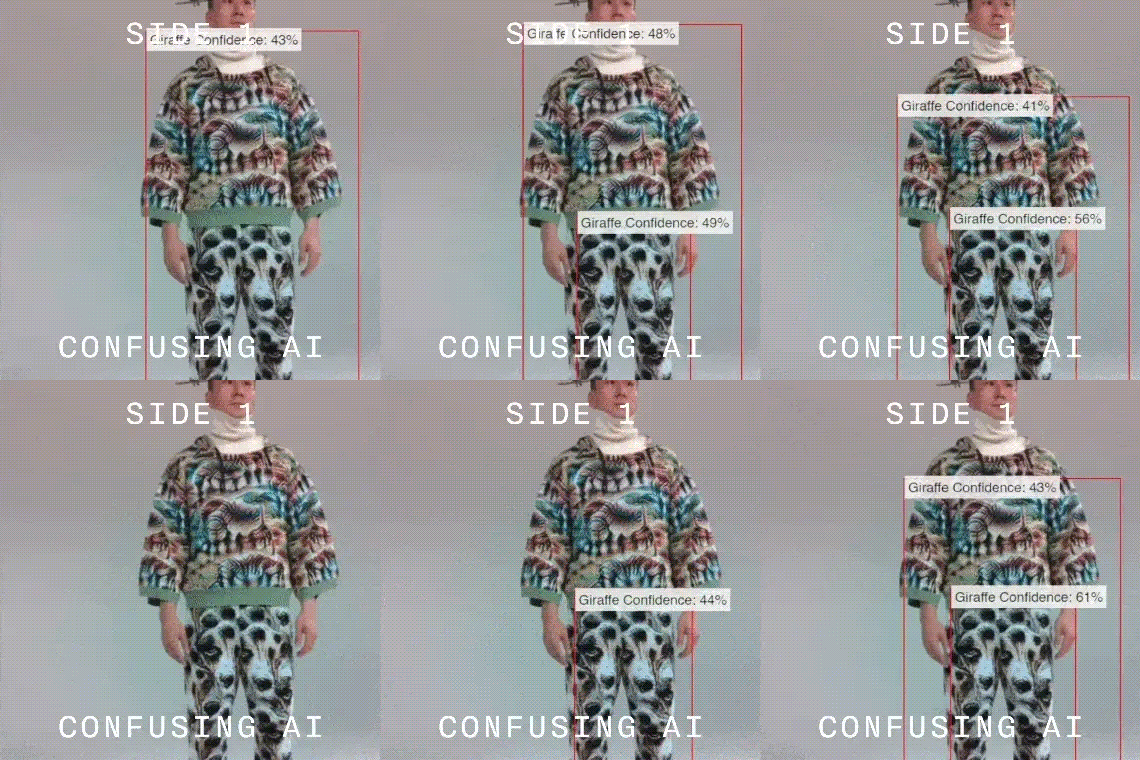
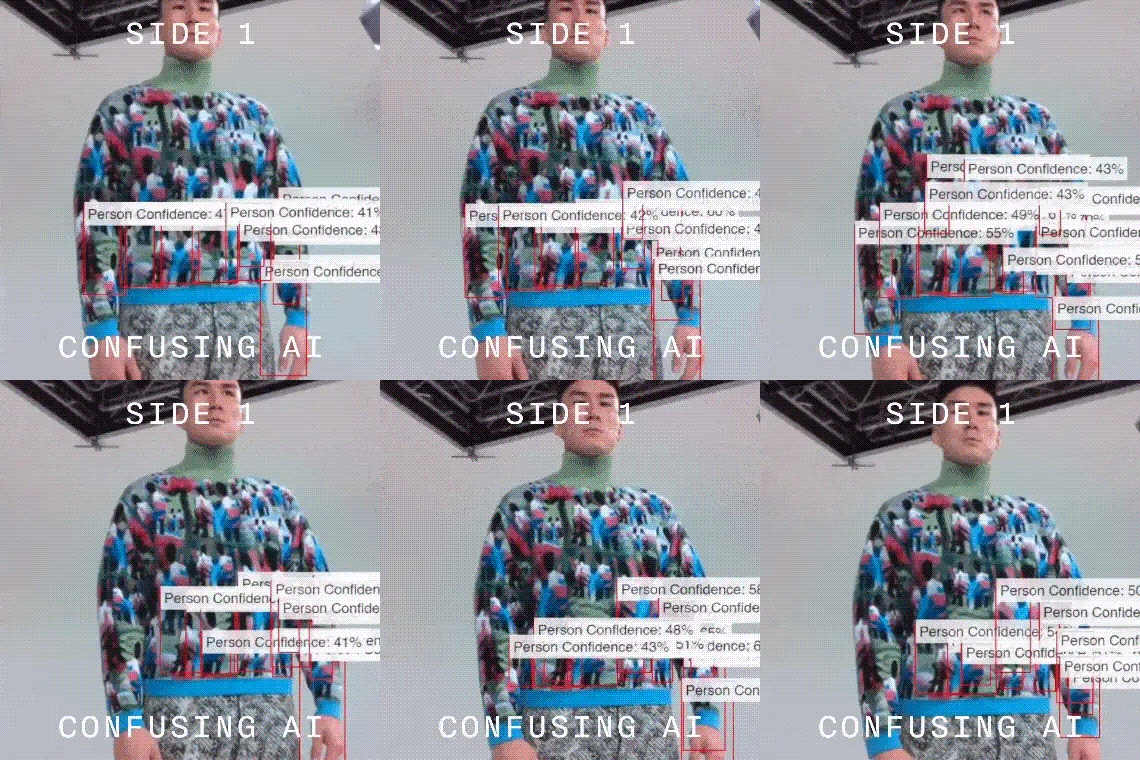
What these increasingly sophisticated sensing surveillance systems remind us, with urgent poignancy, is that even as adversarial garments find their way from the laboratory to the body, the architectures they exploit are already being patched and upgraded by systems designed to see through them. After all, no countermeasure outruns the adaptive cycle for long. As longtime prominent artist and adversarial fashion researcher Adam Harvey puts it: “Camouflage, in general, should be considered temporary, but especially technical camouflage that targets quickly evolving algorithms” (Harvey, 2019). Adam Harvey’s blunt reminder that camouflage is always temporary then will open onto a deeper question: namely, if the surveillant assemblage now reads the body through thermal signatures, chemical traces, and gait patterns, parsing the self through modalities that bypass the unaided eye, what becomes of hiding?
We briefly return to Bousquet’s concealment, decoying, and bedazzlement – countermeasures that manipulate how a target is perceived by sensors. This leads us to another set of concerns: where do they operate on the body, (in the signal, inside the sensor, or in the interval between them?) And for how long do they work (permanently, or only until the algorithm adapts)? As we contend here, posing these questions is already to recognise that forms of concealment, decoying, and bedazzlement cannot be located solely on the body, nor can their duration be measured in absolute terms. Thus, this bridges an interest into the nature of interface(s) that mediate and disclose an ever-evolving relationship between bodies, signals, and sensors.
We turn to theorist Kris Paulsen, who introduces a conceptual overlay that complements Bousquet’s schema with a focus on “algorithmic camouflage” as a form of interfacing or operating on the interface and as the interface. For Paulsen, “algorithmic camouflage” then is a practice of orientation toward the “mediating structures of the interface and database” where bodies are indexed as information (Paulsen, 2018). From this vantage point, concealment, decoying, and bedazzlement become operations that a practice of interfacing can enlist, inhabit, and for us even subvert. We therefore aim to make more explicit our definition of differential (il)legibility operative in terms of how it is tied intimately to interfaces or interfacing. An interface, on one hand, is a surface, whether a literal textile, screen, or coating that mediates between body and sensor. It is also an enactive process [interfacing], or the real-time negotiation of legibility itself, manifesting as the fluctuating confidence-score gradient or the temporal lag between frame capture and algorithmic classification. Paulsen thus extends Bousquet by showing that the counter-conduct tactics mentioned above cannot be separated from interface(s) where capture occurs. The etymology she unearths makes this point even more concrete.
As Paulsen uncovers in her essay, “Rogue Pixels: Indexicality and Algorithmic Camouflage” (2018), the term camouflage reaches back to the French camoufler and Italian camuffare – words for disguise, for applying a second skin cosmetically. But she unearths a more telling root, homing in on the French word camouflet, which is a carefully hidden land mine or smoke bomb that explodes without any surface rupture. In this older sense, camouflage has little to do with blending into a visual background. It is, instead, a practice of operating at the interstices of surfaces, “creating a smoke screen or intervening surface” that alters how something is registered rather than whether it is seen at all.
What the camouflet makes palpable is that the act of camouflaging was always already an interface problem. Put differently, its smoke screen functioned as a mediating layer before the term existed, and today’s camouflers must attend to these changing realities unfolding via digital screens and sensors. “Camouflers,” as Paulsen writes, “operate on or as an interface. They commute their presence onto the screen. They think like pixels, like bits” (Paulsen, 2018: 432). The deeper implication that follows centres upon the nature of the interface itself: it is never a neutral surface of capture. When it works, it tends toward what Alexander Galloway calls a “self-annihilat[ing]” surface, one that presents an image while concealing its own operations. Nonetheless, what is intended here as transparency is an effect, not a given (Galloway, 2009, 2013; Paulsen, 2018). Beneath that effect is what the interface registers, indices or signs that bear a causal connection to the world they record.
Building on Charles Sanders Peirce, Paulsen argues that indices are inherently “dubious, open-ended, present-tense signs whose meanings are dependent upon context and clamor for attention and interpretation” (2017: 37; 2018: 419). Seen this way, a single pixel can sustain contradictory readings; a footprint or a heat trace is not a self-evident fact but a sign that can be made to contrive plots of algorithmic disorientation. The contemporary camoufler works with this instability. The task for them accordingly, is to unwork the interface, to slip below the “threshold of detectability” and become “un-indexible as information” (2018: 414). Camouflage in the age of machine vision, then, is not primarily about evasion but rather a type of interface sabotage which could entail making the body’s signature illegible to an automated sensorium’s capture, even if that leaves the body plainly visible to a human eye (Paulsen, 2018).
Yet, as we have attempted to foreground so far, this very effort to slip below the threshold of detectability also now collides and becomes thoroughly entangled with industrial surveillance systems that are increasingly treating noise and anomaly as a generative resource. Infrared detection systems used daily on millions of individuals, for instance, have been augmenting their training with the very adversarial patches designed to fool them, using these perturbations to harden their own recognition thresholds (Strack et al., 2024; Uplinger et al., 2023).
Similarly, the growing industry of synthetic training data actively manufactures “edge cases” or rare poses, occlusions, or environmental conditions that real-world datasets lack – to pre-emptively train models against any future deviation, embracing a “nascent heterophilic logic” (Jacobsen, 2025), “…rendering all differences generatable, attributable, calculable, tractable, and ultimately useful to the algorithm” and “by making endlessly combinable and recombinable – so there are no fixed reference points, no fixed human bodies” (Jacobsen, 2025). What is being manufactured here, in effect, is a type of ‘error’ itself – the anomalous, the misrecognition – all the ways a model might fail are attempts to simulate in advance, turned into training data, and folded back into a model’s architecture.
At the heart of this shift also resides an intersecting dynamic playing out. Synthetic data, in this light, is the generative face of the principle we earlier identified with Parisi, that noise and the incomputable are immanent to computation, at once properties to be filtered and resources to be mined (Parisi, 2019; Parisi, 2021; Dixon‑Román & Parisi, 2025). But the stakes extend further: as algorithms according to Parisi, “learn to learn” from content and context‑specific data, their search capacity detaches from known probabilities, and indeterminacy becomes internal to how they hypothesise. Machine cognition, Parisi argues, engenders its own form of knowing, reasoning through and with uncertainty [3].
Surveillance systems, then, have also critically undergone a transformation through the very logical procedures of machine cognition: a movement toward abductive reasoning, or put differently, the speculative generation of hypotheses from incomplete data. Where species of reasoning such as ‘induction’ matches the unknown to the known, abduction invents new rules, new categories, new ways of making the illegible legible before it has been captured (Parisi, 2019a, 2019b, 2021, 2022, 2023, 2025). More concretely, and related to our focus on indices, we can consider another example here, a heat trace that is detected behind a wall. It may not point to a human body in any straightforward sense. Instead, it might trigger a speculative profile or a “potential threat”, whose connection to the source is guessed rather than directly indicated. The index, then, is no longer a simple clue. It becomes multiplied or a prompt for inventing new rules, not necessarily a ground for identification, creating speculations that can be disorienting or sinister for machines and humans alike.
We can follow how this algorithmic abductive form of reasoning runs through the veins of contemporary infrastructure – wired into the fabric of everyday life, distributed across the very automated sensorium that now forms the background against which all movement is read, what Andrew Guthrie Ferguson terms “sensorveillance” (Ferguson, 2026). Namely, the myriad sensors, Flock cameras, detection systems, traffic cameras that log license plates, doorbell cameras that capture passing faces, thermal sensors that register body heat through walls – together forming an algorhythmic (Miyazaki, 2012) mesh that tightens around every moving body. A mesh that never “sees,” but instead hypothesises, ranks, and thresholds, inferring a person from a partial plate, a few frames of gait, a heat blur behind a wall. Even more, this sensorveillance infrastructure is increasingly enforcing what Bousquet has referred to as the martial gaze, “that encompasses the entire range of sensorial capabilities relevant to the conduct of war” (Bousquet, 2018: 11).
More perilously, it is a gaze that actively profiles and disrupts, powered by an incitatory logic that ceaselessly probes and provokes features or processes of surveilled environments so that threats emerge, reveal themselves, and become tractable – thus turning uncertainty into an engine of continuous targeting (Reichborn-Kjennerud, 2025). Operationally, this is an abductive sensorium that acts upon the world to generate the very reactions it then converts into actionable data, learning in real time from the rhythms of response and disruption it sets in motion, a process military theorists describe as “fighting for, rather than with, information” (Reichborn-Kjennerud, 2025).
Building on this martial orientation and as we will further chart, what increasingly links various zones and distributed sites – from military trenches to civilian infrastructures – is also a shared enlistment of fabrics and coatings deployed as interfaces in their own right, designed to perturb the automated sensorium at the very thresholds where bodies become legible. Even more critically, it enacts an art of thriving in an interval that itself becomes integral to this practice of differential (il)legibility. Fundamentally, if there are leakages and latencies within negative optics, it must continuously spawn forms that race against these modes of capture, however temporary. We explore this further next.

III. Radiant Skins: Concealment, Decoying, and Bedazzlement at the Thermal Interface
:: Seeing according to temperature turns everyone into a potential suspect or target :: Lisa Parks
:: Heat, we are reminded, signifies not only an attribute of material properties, but, as a sign of life, the mystery of life itself :: Niall Martin
Long before materials science formalised forms of concealment or techniques of camouflage (and before military stealth programs were declassified), fiction had already seeded a cultural imagination rich with spectral visions of imperceptibility. Philip K. Dick’s A Scanner Darkly (1977) featured a scramble suit that projected a constantly shifting composite of facial fragments, producing visual white noise that fractured the wearer’s identity rather than merging with a background. William Gibson’s Neuromancer (1984) introduced the mimetic polycarbon suit, a chameleon textile that shifted colors to match its surroundings, though inert on the thermal register. It was arguably Predator’s cloaking device (1987) that first brought multispectral evasion to the screen: the alien’s skin bent light and masked body heat, forcing its human prey to think across visible and infrared coincidentally. Two years later, Ghost in the Shell (1989) coined the term “therm-optic camouflage,” embedding the fantasy of multispectral invisibility in a networked urban sensorium. What was once science fiction is now hardening into a material arms race.
The field of multispectral camouflage (MCC) has since opened a decisive front in what arguably has translated variations of these visions – engineering surfaces that steer and scatter thermal and visible signatures with tailored precision. At the same time, the sensors behind the martial gaze have also transformed (Kim et al., 2019; Wang et al., 2025). Once limited to a single band of the spectrum such as visible light or thermal infrared alone – today’s surveillance systems can fuse visible, thermal, and hyperspectral data into further coordinated, multi‑layer architectures. As a result, ‘camouflage’ keyed to a single band of the spectrum becomes increasingly obsolete, sparking a wave of innovation around fabrics and materials designed to counter multiple sensors simultaneously. Since every object above absolute zero radiates heat, engineering targets this inescapable signature through low emissivity or the ability of a surface to radiate minimal heat (Wang et al., 2022). Further, such fabrics and materials exploit the same logic of spectral gaps and intervals between detection and adaptation that we have traced throughout this paper – but now those gaps are stretched across multiple spectral bands, multiplying possible sites where mismatches can occur and, potentially, where differential [il]legibility can intervene.
Table 1. A Taxonomy of Bousquet’s Counter-Conduct & Differential (Il)legibility at the Interface
| Tactic | Artifact | Operation on Signal | Site (Interface) | Temporal Logic | Relation to Differential (Il)legibility |
|---|---|---|---|---|---|
| Concealment | STG/InfraHex thermal-masking poncho | Suppress body heat via low emissivity; reflect ambient IR | Outer fabric surface mediating body↔sensor | Durational precarity: heat buildup, environmental mismatch risk | Body hovers at detectability threshold; legibility as “cold spot” if ambient is warmer. |
| Decoying | Zhu et al., adversarial heater garment | Inject fixed, spatially uneven thermal pattern that corrupts person classification | Embedded carbon-fiber heaters as indexical counterfeit | Static; exploits confidence threshold at inference; vulnerable to retraining | Counterfeit signature superimposed on body; detector cannot stabilise “person” label. |
| Bedazzlement | Long et al., dual-modal thermally activated adversarial shirt | Reveal co-optimised visible+IR perturbation on demand, overwhelming both channels | Thermochromic layer + heaters; interface includes timing of reveal | On-demand activation; exploits interval between reveal and next inference cycle | Confidence-scores driven below threshold across fused modalities; body becomes unparseable noise. |
Turning to the trenches of the ongoing war in Ukraine, lightweight thermal-masking cloaks have revealed how hiding has become a struggle not only against the martial gaze but equally against environments themselves. For example, in a cool forest, wearers may vanish; in an open field warmer than the cloak, however, they might become a dark spot against the thermal background or more visible than if they wore nothing at all.[4] Varying claims about an array of thermal-masking cloaks used across Ukraine, have suggested effectiveness of up to two hours at 250 metres in open terrain, though only when the wearer moves slowly and the cloak’s surface temperature matches the ambient background.
Scoping in further on a few examples, the Czech‑made InfraHex material reportedly reduces detectable heat output by 96%,[5] while Ukrainian border guards’ anti‑thermal suits operate on the same principle: trapping body heat behind a reflective layer. What unites these designs and what links them to their vulnerabilities is also their sensitivity to environmental factors in relation to, for example, a drone-mounted thermal imager.
As we wish to point out further and emphasise, differential (il)legibility also co-emerges from the coupling of body temperature, fabric reflectivity, fluctuating environments, and the sensing apparatuses that encode and decode indexical traces i.e. heat spots, emissivity patterns – as they are suppressed or altogether misregistered. The cloak, echoing Kris Paulsen, is an interface: a mediating surface that alters how a body is indexed rather than whether it is seen at all. But an interface is never unidirectional. The same low‑emissivity layer that reflects the sky also traps the wearer’s own heat, and the duration of concealment or the time before trapped warmth betrays the silhouette – is measured in minutes, sometimes seconds. Hiding becomes a finely balanced calibration for the wearer, who must calculate ambient temperature, movement rate, and an unseen sensor’s thresholding logic, knowing that the cloak granting reprieve in a forest may produce fatal exposure in an open field.
The thermal-masking cloak reveals that differential (il)legibility is not only a semiotic problem of signatures and templates. It is also intimately a thermodynamic problem; the body leaks heat on a timeline no training set fully captures. The operational template that surveillance systems expect, such as a stable thermal silhouette, can be destabilised not only by the cloak’s reflective surface but by the living body’s refusal to remain thermally quiet. This is the ‘doubled body’ we mentioned previously, that the cloak negotiates: simultaneously a “data‑double” in the surveillant assemblage and a sweating, breathing organism whose heat can betray or perhaps even hide it on a timeline no algorithm fully anticipates.
Another line of design routes perturbation into the thermal register through what we will call ‘active addition’. Unlike the thermal-masking cloak’s subtractive logic or hiding by suppression at the cost of environmental dependency – this approach actively superimposes a counterfeit thermal signature.
While the aforementioned studio in section two, like Cap_able deploys algorithmically optimised adversarial patches in the visible spectrum – patterns that, however effective against detectors, can also tend toward high‑contrast, high‑saturation textures that can make them conspicuously visible to human observers (Long et al., 2025). The infrared adversarial garment developed by Zhu et al., from Tsinghua University (2023) does not rely on printed patches. Instead, they have opted to embed twelve flexible carbon‑fiber heaters, similar in principle to the rear‑window defroster of a car, directly inside ordinary fabric. When powered, each heater glows at a distinct brightness in thermal imaging, though it remains invisible to the naked eye.
As they explain, a neural network was trained on thousands of infrared images to determine the best positions, angles, and power levels for the twelve heaters. During training, the network experimented with different discrete settings – 50%, 75%, 100% – treating them as probabilities rather than fixed choices, allowing it to settle on the most effective configuration. Once training was complete, each heater was locked to a single, permanent power level. The result is a static, spatially uneven thermal pattern that consistently lowers the confidence of person‑detection algorithms.

Another fascinating exploration along these lines is by authors Long et al., (2025) in their paper titled “Thermally Activated Dual-Modal Adversarial Clothing” which as they illustrate throughout, integrates flexible, silicone‑encased heaters beneath a thermochromic dye layer – a material that becomes transparent when heated. As they spell out further, when at room temperature, their garment is indistinguishable from an ordinary black T‑shirt; yet when a wearer enters a surveilled zone, equipped with a portable power supply, heating pads are activated, and within fifty seconds the thermochromic layer becomes transparent, emitting or unleashing an algorithmically optimised adversarial pattern.
The purpose here, then, is not to conceal an anthropomorphic body by having it blend seamlessly into the background, nor does it serve to decoy the detector with a false signature elsewhere in the scene.
In this example, it rather works by bedazzling: the patch is co‑optimised across shape and texture to overwhelm both visible and infrared detectors simultaneously, driving confidence-scores below the threshold at which a “person” classification can stabilise.
What makes this application distinctive, however, is that the perturbation remains hidden until the wearer triggers it. Bedazzlement thus becomes a matter of timing as much as pattern – an on‑demand, dual‑modal evasion that exploits an evanescent interval between the garment’s thermal activation and the detector’s next adaptive cycle. That interval is the brief window before the system retrains to recognise the perturbation.

Taken together, these garments as we aimed to illustrate, distribute forms of legibility across time and spectra. Read through Bousquet’s triad – the Ukrainian cloaks pursue concealment, but discover that concealment under an automated sensorium is never a fixed property: it is also a struggle and uneasy entanglement within the gap between body heat and an ambient background. As we also analysed, the Zhu et al., garment performs as a type of decoy design, but its decoy is a static, spatially optimised thermal pattern: each heater is locked to a single power level, and the resulting arrangement of hot and cool patches presents the infrared detector with a counterfeit signature that redirects the detector’s gaze away from the ‘person’ category.
The Long et al., garment enacts bedazzlement, but on a temporal delay, a thermochromic layer hides a dual‑modal (visible+IR) adversarial pattern until the wearer activates it. In each case, a familiar tactic is reconfigured: concealment becomes a type of environmental negotiation, decoying a spatial counter-signature, bedazzlement becomes a timed intervention. Differential (il)legibility, then, names not a supplementary tactic in a repertoire, but the shared operative principle that each of Bousquet’s tactics assumes when the site of camouflage becomes the interface and the sensorium becomes abductive: a logic of threshold‑modulation timed to the interval before adaptive closure.
This temporal, threshold‑based operation has a clear consequence for the anthropomorphic body: its visible form may remain largely unchanged, but what is deformed is the operational template that would render it legible as a person. Yet the operational template that renders a body legible as “anthropomorphic” is not an immutable form or template either and becomes challenged on those grounds too. As we have examined, it is profoundly an indexical effect produced by measurable signatures. And equally, what is produced indexically can also be withheld, or, in the terms and processes we have been developing, can be made the object of a ‘negative prehension’. More concretely, the body’s thermal or visual signature is not ignored by the sensorium; it is actively excluded from the synthesis that would classify a “person.” A withholding, moreover, that operates at the level of the interface and interval (Pape, 2024).
The thermal-masking cloak, the adversarial heater garment, and the dual‑modal shirt are, in Laura Tripaldi’s terms, “physical space[s] of mutual interaction which modif[y] the world around us and open us to the possibility of modifying ourselves in turn” (Tripaldi, 2022: 4). Across these three modes of counter‑conduct, the body enters into a reciprocal pressure with the surfaces that envelop it. It displaces itself across a distributed modulation of thermal and behavioural signatures. It in turn transforms our notion of what we also mean by a body, not a biological substrate that simply pre‑exists systems of detection or classification. Rather, it is continually remade as an “indexical effect” at the very interface where fabric, sensor, and environment converge, a potential fugitive margin.
IV. Conclusion: Fugitive Thresholds
We set out in this essay to interrogate how the anthropomorphic body is reimagined when the margins of survival contract – when war zones reduce life to a thermal signature, and an automated sensorium pierces through every layer of the spaces we inhabit: the battlefield, the city street, the surface of the skin, and the material interfaces that counter and transform how bodies are detected. We insist that just as privacy tools – browsers, VPNs, encrypted protocols – have become the frontline of resistance in our networked world, so now material countermeasures must take their place at the heart of the battle for the physical self, for the body as a “medium of transmission” (Ashton, 2020; Pape, 2017).
The martial gaze assembled from an automated sensorium that we have tracked from drone to doorbell camera to data centre acts upon what it senses. It perturbs; it feeds on anomaly; it would grind to a halt without the volatility it claims to suppress. To navigate its probabilistic and detection thresholds is to stutter within it, to be differentially registered, to also conjure strategies that can potentially entail poisoning the data supply chain.
Such a mode of operation is necessary given an automated sensorium that is reasoning abductively – generating hypotheses from incomplete data, ranking them probabilistically, and always leaving a gap between inference and closure. As we have aimed to explicate, to be differentially (il)legible is to inhabit exactly this interval between detection and classification: to modulate one’s composite signature such that the confidence-score hovers and the bounding box fails to anchor.
Still enduring issues remain, namely, who gets to hide, and at what cost? Asymmetries persist because the very garments we have surveyed: thermal-masking cloaks, adversarial textiles, actively heated decoys, still remain bound to circuits of capital and technical expertise that nonetheless map uncomfortably onto the military‑industrial apparatus they counter. A low‑emissivity poncho retails for hundreds of dollars; a knitted adversarial sweater, however open‑sourced its pattern, still presupposes access to industrial knitting machines or the disposable income to commission one. To champion differential (il)legibility without recognising these asymmetries risks naturalising a world in which the capacity to remain unresolved is merely another privilege to be purchased. A truly fugitive practice, then, must attend not only to the modulation of thresholds but to the social conditions under which such modulation becomes accessible and collectively sustainable beyond an individual purchase or customisation.
Ultimately, caught between radiating and being read, between metabolic timing and atmospheric pressure, the body enters the twenty-first century as a site of struggle and metamorphosis. The question, then, is not simply how to disappear, but how to practice a differential (il)legibility that stays in motion, migrating from threshold to threshold as an automated sensorium learns. This is never a final state. It is a restless becoming: a body never quite captured, never quite resolved, and never quite still enough to be definitively sensed. Lights on or off.
ACKNOWLEDGEMENTS: Thank you to Sasha Shilina and Patrick Leftwich for their helpful comments and feedback.
NOTES
[1]. As Andrew Parker further explicates in his 2011 essay On the Origin of Optics: “Eyes, and probably predators, evolved for the very first time around 521 Ma. These facts are recorded in the fossil record, but the important point is the significance given to them. Now the ‘Light Switch Theory’ can begin to unfold. Simply, the theory holds that the initial introduction of vision to the behavioural system of animals caused the Cambrian explosion. Vision was introduced with the evolution of the very first eye, capable of producing visual images, which took place around 521 Ma. The visual picture of animals that lived just before this time, as seen by the most sophisticated light receptors of the time, was that of a blurred “blue” field. However, the same picture imaged at around 521 Ma, again as it would have been viewed by an inhabitant with the most sophisticated light receptors of the time, would have revealed all the animals surrounding it. Unlike the receptors of other senses, the eyes would have suddenly leapt in efficiency throughout its evolution as a lens evolved within the organ.”
[2]. The one‑pixel attack is not reliably effective against all images or models, but its existence underscores a deeper point: the decision boundary of a modern classifier can be pierced by an input change so minute that no human observer would notice.
[3]. As she has traced, what may be conceived as the master model of computational cognition based upon the deductive logic of symbolic AI becomes transformed in the light of a post-Turing shift in computing. Computing is then characterised by its interactive properties that are no longer rooted in following fixed instructions but instead in learning through interaction with objects, persons, and environments. With these elements structuring algorithmic intervention across various domains, Parisi identifies the rise of a predictive paradigm grounded in an “open architecture of axioms”, a recursive structure in which algorithms modulate and generate new rules through ongoing interaction with their operational contexts.
A defining marker of this paradigm then is bound up with algorithms now incorporating and transforming the incomputable (e.g., infinite data or real numbers) into quantifiable patterns, redefining them as measurable randomness, complexity, or Omega-infinity computations (Parisi, 2013; 2017a). She then details an “automation of automation” as a recursive process through which algorithmic systems autonomously generate patterns, arising from the recomposition of fine-grained relations within ever-expanding data flows.
[4]. STG Defence. (2020). About us. https://stg-defence.com/en/pro-nas/
[5]. InfraHex. (n.d.). Why thermal detection matters. https://www.infrahex.com/#why
REFERENCES
Alù, A. (2016). Metamaterial-based device engineering. In Frontiers of Engineering: Reports on Leading-Edge Engineering from the 2015 Symposium (pp. 99–106). National Academies Press. doi: 10.17226/21825
Ashton, L. (2020). Rogue pixels: The tactics of invisibility in Hito Steyerl’s How Not to Be Seen. Surveillance & Society, 18(3), 98–111.
Bousquet, A. (2018). The Eye of War: Military Perception from the Telescope to the Drone. University of Minnesota Press. https://doi.org/10.5749/j.ctv6hp332
Bousquet, A. (2024). Becoming (Im)Perceptible : From Scopic Regimes to the Martial Gaze. In Drone Aesthetics : War, Culture, Ecology (pp. 32–45). Retrieved from https://urn.kb.se/resolve?urn=urn:nbn:se:fhs:diva-13227
Bousquet, A. (2026, May 3). Algorithms at the threshold of enmity [Interview]. Diffractions Collective. https://diffractionscollective.com/2026/05/03/algorithms-at-the-threshold-of-enmity-antoine-bousquet/
Browne, S. (2015). Dark matters: On the surveillance of blackness. Duke University Press.
Cap_able. (2022). Manifesto Collection. Kickstarter. Retrieved May 11, 2026, from https://www.kickstarter.com/projects/capable-design/manifesto-collection-by-cap-able
Deleuze, G. (1992). Postscript on the societies of control. October, 59, 3–7.
Deseriis, M. (2017). [Review of the book Dividuum: Machinic capitalism and molecular revolution, by G. Raunig]. International Journal of Communication, 11, 1050–1056.
Dixon-Román, E., & Parisi, L. (2025). Cosmocomputation and negpoethics. Social Text, 43 (3), 81–109.
Eneman, M., Ljungberg, J., Miranda, D., Urquhart, L., & Webster, W. (2025). The ontological shift in surveillance: Revisiting the “surveillant assemblage” in the age of facial recognition. Surveillance & Society, 23(4). https://doi.org/10.24908/ss.v23i4.20070
Ferguson, A. G. (2026, March 17). “Sensorveillance” turns ordinary life into evidence: How our everyday devices became police informants by default. IEEE Spectrum. https://spectrum.ieee.org/digital-surveillance
Galloway, A. R. (2009). The unworkable interface. New Literary History, 39 (4), 931–955. https://doi.org/10.1353/nlh.0.0062
Galloway, A. R. (2012). The interface effect. Polity.
Haggerty, K. D., & Ericson, R. V. (2000). The surveillant assemblage. British Journal of Sociology, 51(4), 605–622.
Harvey, A. (2017). HyperFace. Adam Harvey Studio. Retrieved May 11, 2026, from https://adam.harvey.studio/hyperface
Huang, S., Kathirvel, R. P., Lau, C. P., & Chellappa, R. (2023). Whole-body Detection, Recognition and Identification at Altitude and Range. arXiv. https://arxiv.org/abs/2311.05725
Jacobsen, B. N. (2025). Machine learning, synthetic data, and the politics of difference. Theory, Culture & Society, 42(3). https://doi.org/10.1177/02632764241304687
Keller, J. (2021, January 8). Military researchers ask industry to develop long-range biometrics and facial recognition algorithms. Military Aerospace. https://www.militaryaerospace.com/sensors/article/14189954/facial-recognition-long-range-biometrics
Kim, T., Bae, J., Lee, N., & Cho, H. H. (2019). Hierarchical metamaterials for multispectral camouflage of infrared and microwaves. Advanced Functional Materials, 29(10), 1807319. https://doi.org/10.1002/adfm.201807319
Liu, F., Ashbaugh, R., Chimitt, N., Hassan, N., Hassani, A., Jaiswal, A., Kim, M., Mao, Z., Perry, C., Ren, Z., Su, Y., Varghaei, P., Wang, K., Zhang, X., Chan, S., Ross, A., Shi, H., Wang, Z., Jain, A., & Liu, X. (2023). FarSight: A physics-driven whole-body biometric system at large distance and altitude. arXiv. https://arxiv.org/abs/2306.17206
Liu, F., Chimitt, N., Guo, L., Jain, J., Kane, A., Kim, M., … & Liu, X. (2025). Person recognition at altitude and range: Fusion of face, body shape and gait. arXiv preprint arXiv:2505.04616.
Long, J., Jiang, T., Liu, H., Ma, C., Zhou, W., Yang, Y., & Yao, W. (2026). Thermally Activated Dual-Modal Adversarial Clothing against AI Surveillance Systems. https://doi.org/10.48550/arXiv.2511.09829
MacKenzie, A., & Munster, A. (2019). Platform Seeing: Image Ensembles and Their Invisualities. Theory, Culture & Society, 36(5), 3-22.
Mamedov, T., Konushin, A., & Konushin, V. (2025). DynaMix: Generalizable person re-identification via dynamic relabeling and mixed data sampling. arXiv. https://doi.org/10.48550/arXiv.2511.19067
Mandlik, S., Labade, R., Chaudhari, S., & Agarkar, B. (2025). Enhancing gait recognition with attention-based spatial-temporal deep learning: The GaitDeep framework. Computer Science Journal of Moldova, 33(2), 188–218. https://doi.org/10.56415/csjm.v33.10
Miyazaki, S. (2012). Algorhythmics: Understanding micro-temporality in computational cultures. Computational Culture, (2). http://computationalculture.net/algorhythmics-understanding-micro-temporality-in-computational-cultures/
Nguyen, K., Liu, F., Fookes, C., Sridharan, S., Liu, X., & Ross, A. (2025). Person Recognition in Aerial Surveillance: A Decade Survey. arXiv. https://doi.org/10.48550/arXiv.2511.17674
Pape, T. (2024). The aesthetics of stealth: Digital culture, video games, and the politics of perception. The MIT Press. https://doi.org/10.7551/mitpress/15539.001.0001
Parikka, J. (2023). Operational images: From the visual to the invisual. University of Minnesota Press.
Parisi, L. (2013). Contagious architecture: Computation, aesthetics, and space. MIT Press.
Parisi, L. (2019a). Critical computation: Digital automata and general artificial thinking. Theory, Culture & Society, 36 (2), 89–121.
Parisi, L. (2019b). The alien subject of AI. Subjectivity, 12 (3), 203–219.
Parisi, L. (2021). Negative optics in vision machines. AI and Society, 36(4), 1281–1293. https://doi.org/10.1007/s00146-020-01096-7
Parisi, L. (2022). Recursive philosophy and negative machines. Critical Inquiry, 48(2), 313–333.
Parisi, L. (2025). Recursive apocalypse. Communication Culture and Critique, 18(3), 218–223. https://doi.org/10.1093/ccc/tcaf027
Parker, A.R. (2003) In the Blink of an Eye. Simon & Schuster (London)/Perseus Press (Cambridge, USA + translations), 316pp.
Parker, A. R. (2011). On the origin of optics. Optics & Laser Technology, 43 (2), 323–329. https://doi.org/10.1016/j.optlastec.2008.12.020.
Parks, L. (2017). Vertical mediation and the U.S. drone war in the Horn of Africa. In L. Parks & C. Kaplan (Eds.), Life in the age of drone warfare (pp. 138–158). Duke University Press.
Paul, K. (2025, November 24). How to disappear: The rise of anti-surveillance fashion. Mozilla Foundation. https://www.mozillafoundation.org/en/nothing-personal/anti-surveillance-fashion-privacy-ai/
Paulsen, K. (2017). Here/there: Telepresence, touch, and art at the interface. The MIT Press. https://doi.org/10.7551/mitpress/10412.001.0001
Paulsen, K. (2018). Rogue Pixels: Indexicality and Algorithmic Camouflage. Signs and Society, 6(2), 412–434. doi:10.1086/696932
Phillips, P. J. (2002). Human identification technical challenges. Proceedings. International Conference on Image Processing, I-I. https://doi.org/10.1109/ICIP.2002.1037956
Raunig, G. (2017). Dividuum: Machinic capitalism and molecular revolution (A. Derieg, Trans.). Semiotext(e). (Original work published 2015)
Redmon, J., Divvala, S., Girshick, R., & Farhadi, A. (2016). You only look once: Unified, real-time object detection. In Proceedings of the IEEE Conference on Computer Vision and Pattern Recognition (CVPR) (pp. 779–788). IEEE. https://doi.org/10.1109/CVPR.2016.91
Reichborn-Kjennerud, E. (2025). The world according to military targeting. MIT Press.
Skrebels, A. (2023, February 7). Cap_able blocks facial recognition software with knitted clothing. Dezeen. https://www.dezeen.com/2023/02/07/capable-blocks-facial-recognition-software-knitted-clothing/
Strack, L., Waseda, F., Nguyen, H. H., Zheng, Y., & Echizen, I. (2024, October). Defending against physical adversarial patch attacks on infrared human detection. In 2024 IEEE International Conference on Image Processing (ICIP) (pp. 3896-3902). IEEE.
Su, J., Vargas, D. V., & Sakurai, K. (2019). One pixel attack for fooling deep neural networks. IEEE Transactions on Evolutionary Computation, 23(5), 828–841. https://doi.org/10.1109/TEVC.2019.2890858
Tedeschi, M., Hautala, J., & Resmini, A. (2025). Data doubles co-constructing spatial practices: An empirical study. Geoforum, 167, 104459. https://doi.org/10.1016/j.geoforum.2025.104459
Tripaldi, L. (2022). Parallel minds: Discovering the intelligence of materials. Urbanomic.
Uplinger, J., Schesser, D., Meyer, C., et al. (2023). Adversarial learning using synthetic IR imagery. In Proc. SPIE 12529, Synthetic Data for Artificial Intelligence and Machine Learning: Tools, Techniques, and Applications, Article 125290C. https://doi.org/10.1117/12.2663612
Vermeij, G. J. (1987). Evolution and escalation: An ecological history of life. Princeton University Press.
Virilio, P. (1989). War and cinema: The logistics of perception (P. Camiller, Trans.). Verso. (Original work published 1986)
Virilio, P. (1994)[1988]. The vision machine. Indiana University Press.
Wang, S., et al., (2022). Large‐area low‐cost multiscale‐hierarchical metasurfaces for multispectral compatible camouflage of dual‐band lasers, infrared and microwave. Advanced Functional Materials, 32 (36), 2205547. https://doi.org/10.1002/adfm.202205547
Wang, S., et al., (2025). Design of metasurface structures compatible with multiple detection methods for stealth applications. Physics Letters A, 544, 130487. https://doi.org/10.1016/j.physleta.2025.130487
Whitehead, A. N. (1978). Process and reality: An essay in cosmology (Corrected ed.). Free Press.
Zhang, S., Zheng, J., Zhu, S., & Yan, C. (2025). TrackletGait: A robust framework for gait recognition in the wild. IEEE Transactions on Multimedia, 27, 8875–8887. https://doi.org/10.1109/TMM.2025.3607705
Zhu, X., Hu, Z., Huang, S. et al., Hiding from infrared detectors in real world with adversarial clothes. Appl Intell 53, 29537–29555 (2023). https://doi.org/10.1007/s10489-023-05102-5