
On Noise: A Mix Across Fifteen Years of Listening and Theory
My research has been on noise for over fifteen years, and I have a long-delayed book hopefully coming out this year on it. I define noise as relative to a theoretical framework. That doesn’t mean it’s subjective, and there are lots of ways noise can be objectively described. My starting point is to acknowledge the multiple overlapping senses of the concept of noise.
These include: an engineering sense (as interference, disturbance, and irrelevance), a normative sense (as a value judgment), an epistemic sense related to randomness and unpredictability, a sense related to negative feedback, malfunction, and resistance, a sense related to positive feedback and non-linear amplification, and a sense related to ambiguity, deception, and inferential error. Finally, it also has a sonic sense, in which this whole semantic thicket converges.
Though I do enjoy ‘noise music,’ my interest is more about noise in music, in all of the above senses, and the pieces I’ve chosen to play in this mix are designed to display this broad range. Nevertheless, it is a lot more noisy than my usual sets, which are more dance focused, for the reason that these tracks relate more obviously to my research focus.
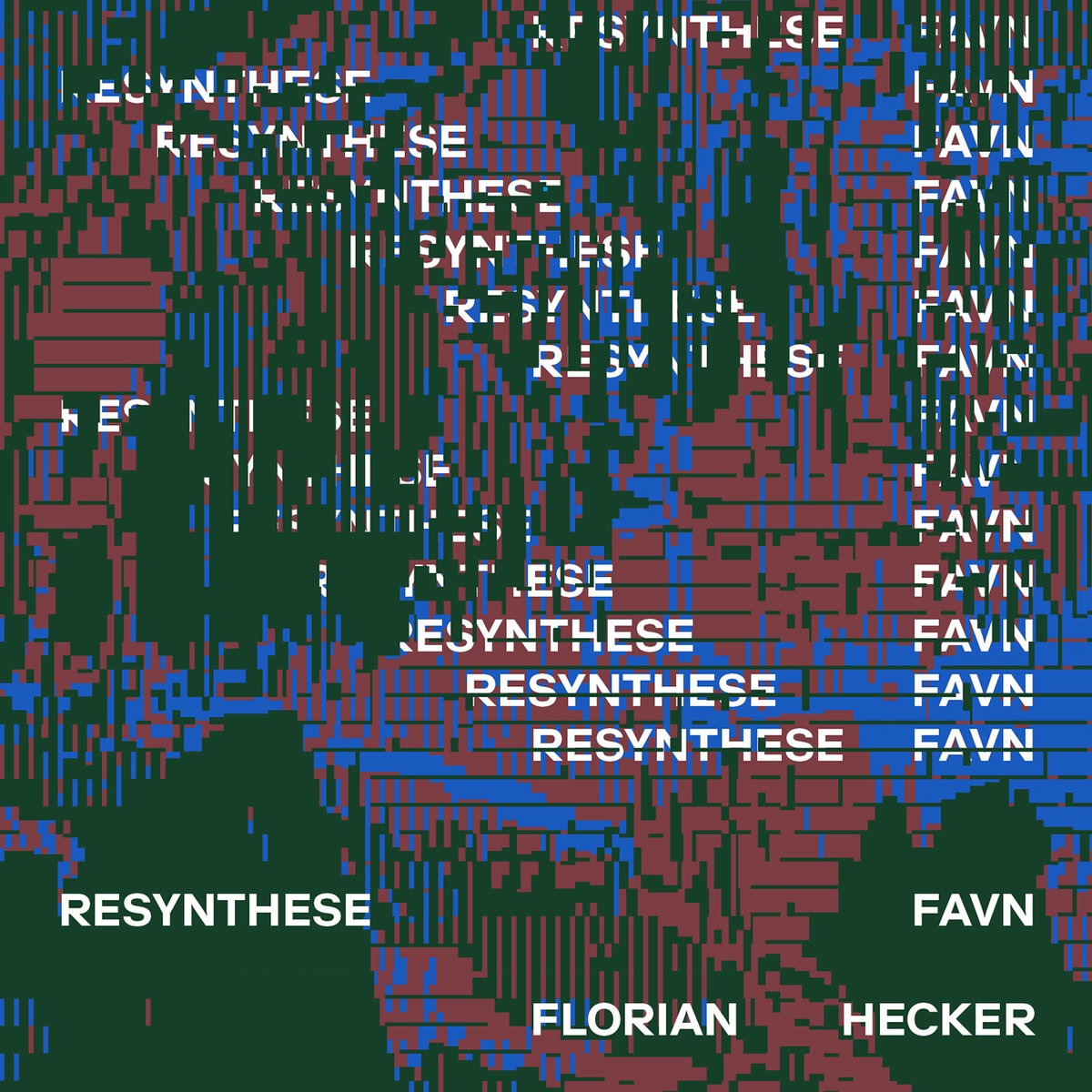
I’ve started the mix with a mashup of two Florian Hecker tracks: the beginning of Resynthese FAVN and ASA 3. Resynthese FAVN takes inspiration from Mallarmé’s ‘L’Après-Midi d’un Faun’, and uses machine listening analysis and resynthesis to create synthetic timbres over ten iterations. The accompanying booklet is produced in collaboration with Urbanomic, and the spoken words are from a libretto written by Maya B. Kronik.
Following Mallarmé’s poem, the themes it develops include the autotelic and synthetic nature of poetry, chimeras and fictions about fictions, non-representational art, and uncertainty or undecidability. Machine learning, synthesis, and uncertainty are very central focuses in my work, so this project is extremely important for me. ASA 3 is from Hecker’s ‘Acid in the Style of David Tudor’ album, which synthesizes the formal innovations of acid house music and post-Black Mountain experimental music. ASA refers to Bregman’s ‘Auditory Scene Analysis’, which is the sonic counterpart to visual image recognition and the basis of contemporary computational accounts of auditory cognition.
Unlike the rest of the album, which features highly random synthetic sounds evoking the timbres of acid house, the three ASA tracks are very minimal electronic pieces that display bistable auditory illusions. I spend some time discussing bistable and multistable auditory illusions in my book because they make audible the subpersonal neurocomputational processes that are transparent to phenomenal awareness, also with reference to Mark Fell’s album ‘Multistability’ and various other composers like Penderecki.
I’ve mixed this mashup with a recent track by Klein, who is an artist I talk about at some length in my book. Her earlier work was much more sample-based and layered, which led some critics to describe her music as a collage, a suggestion she herself rejects. I consider her work to be more aptly described as diagrammatic, in the sense elaborated by Deleuze (in his book on Bacon) and the French school of gesture theory. Her later work has gone down a much more instrumental and even (non-)classical route, but with the same subtle attentiveness to layered textures and apparent contradictions, like simultaneous proximity and distance. Fred Moten called her a “discomposer”, no doubt because her practice could be considered as musical deconstruction, but I think also because her music unsettles or agitates preconceptions.
The next track is by Deena Abdelwahed, whose work draws on traditional Arabic musical styles but adapts them with the synthetic sounds of contemporary club or bass music, often with overt political messages. In this track I love the way she’s reimagined dabke, which is a Levantine folk dance, as a slow stomping banger filled with rage and sadness. Translating the lyrics they begin, “Naive who ever thought, that the nation will endure….” I’ve mixed this in with a track by Lebanese artist Rhea Dally, which is similarly overflowing with fury and grief.
This piece was made for the incredible compilation (and event) series begun by Pisitakun Kuantalaeng, who commissioned a vast ensemble of stellar underground artists to compose a track drawing on sounds of protest, resistance, or revolution with reference to their home countries. Rhea has used a Gregorian chant called Dies Irae (Mass for the Dead) as her source material and made of it an awesome cacophony using her instrument of choice: the octatrack. As she describes it herself, “the song is a multimodal assault…a confrontation with the death of meaning, collapse of temporal order, and dissolution of the self under capitalist surveillance.”
After that I’ve brought in a track by Dean Blunt, partly for relief and juxtaposition from the anguished noise, but it’s also sad and dark in its own satiric-sardonic way. In my book I take his music as an example of what Mark Fisher called Popular Modernism, where the modernist imperative both for formal aesthetic innovation and the overcoming of political oppression is reborn as a popular project rather than an elitist anti-popular movement. As Dhanveer Singh Brar describes it in his book ‘Beefy’s Tune,’ Blunt’s music “flushes out the xenophobic aestheticisation of the experimental” through various stealth attacks on culturally coded expectations.
His cunning use of ambiguity and deception should recall one of the senses of noise I mentioned earlier, linked to what’s called crypsis in biological evolution (something I talk about in my book) and camouflage, which he’s used on his album artwork (as DJ Escrow, coming up soon). I’ve washed this out with the lush modular synth sounds of Loula Yorke, from an album dedicated to the fluid and undular. Her work is just sublime (another concept whose connection to noise I discuss in my book), and there’s nothing you can do but simply give in to the immensity.
But it’s just a brief respite because I bring the noise clattering back in over those gorgeous waves. This time it’s from a piece by Maryanne Amacher called Synaptic Island. She was an extremely important pioneer of early electronic music and radical listening practices, whose research and composition focuses included psychoacoustic illusions and material resonance.
Before it was accepted by modern science, she independently discovered otoacoustic emissions just by careful listening and composed several pieces designed to provoke their audibility: this is one of those pieces. It has an ABA structure where the B section, formed of layered arpeggiated tones, is the ‘synaptic island’ that elicits audible otoacoustic emissions, and the A sections are turbulent oceanic white noise with high-pass filtering and delay transposition. To get the composer’s intended effect, I think it’s important to listen attentively to the whole composition, and for this reason I’ve only used a part from the A section, just before we reach the ‘island.’
The next track is from Gooooose, on the excellent Shanghai-based label SVBKVLT, providing a welcome upbeat turn. Like much of his work, this is some seriously fun and highly idiosyncratic experimental club music. It’s just a snippet though because it’s soon drowned out in static again, this time a track from DJ Escrow (one of Dean Blunt’s many monikers), which is a long piece of mostly harsh noise with Escrow MCing over the top. I’ve just used a small section as a kind of noise bridge to the next track, which is from a longstanding favorite artist of mine: Slikback.

I talk about Slikback’s work in my book as exemplifying a trans-generic music full of synthetic disruptions, idiom warpings, and a critically insightful use of noise. What’s quite particular about his practice is the relentless evisceration and innervation of time, which is hurled into a continuous state of unstable rhythmic convulsions. Club music is mercilessly deconstructed, and sound’s innards are repeatedly disemboweled and dissected, but only to be critically reimagined and surgically reconstructed.
As Rami Abadir argues in his brilliant piece on the aesthetics of darkness in electronic music, a lot of reviews and liner notes tend to describe electronic music artists like Slikback who use a certain amount of noise in their compositions as gesturing toward a dystopian future, and this is just lazy journalism in his opinion (it could be more strongly criticized as displaying a remarkable ignorance of the real conditions of the present) because the artists themselves, especially when they come from areas of contemporary strife and economic hardship, are rather critically responding to present conditions with currently available means. Other artists he mentions as falling within this kneejerk categorisation are many that are dear to my heart, including Kode9, Blackhaine, The Body & Dis Fig, Chino Amobi, Elysia Crampton, and music from labels like Chinabot, Nyege Nyege Tapes, and Hakuna Kulala.
Once again we switch quite quickly into the next track, though, a banger from Hassan Abou Alam’s latest EP. Coming from a small but intensely creative scene of experimental club music in Cairo (including other favorites of mine, like Zuli and 3Phaz) he has put out several groundbreaking albums, each time pushing new boundaries. Like Slikback, his music breaks through the limitations of existing genres or pulls them apart and reconstitutes them in hitherto unimaginable form, and it often involves a lot of noise. I love the way he uses vocals as a source material and warps them into crazy musical elements using techniques like granular synthesis, you can hear this on albums like Shalfata and Mesh Mafhoom and also on this track here. We stay in Cairo’s underground scene for the next track from Azzouni, which is like chopped up and scrambled grime.
It’s just a taste, though, because next I bring back the darkness with a piece by Kavari, a Glasgow-based artist with an explosive style, whose innovative resyntheses of club, industrial, and noise music keep tearing up the script in new mind-blowing and ear-popping ways, garnering a commendation from Aphex Twin as the most interesting music in recent years. Her massive compilation Lost Cuts Vol. 3 was my favorite album of 2024, and this year’s Plague Music is also hard-hitting. This track adroitly contrasts intense pulsating fuzz-noise and slamming kicks with moments of anxious pause. Though it may not be the artist’s intention, I interpret the invocation to be aware of the darkness behind your eyes not as a cliché gesture towards the oxy-moronic idea of ‘human nature’ (as putatively rooted in self-preservation at all costs), but as referring to the lack of substantive self beyond the veil of phenomenal consciousness.

After this profound doom I thought it was time to let the sunlight back in, so the next track is Solar Phase by Mexico-based artist Loris. It’s got this beautiful overtone-loaded instrumental sound leading into an upbeat driving rhythm that just makes you feel good. I’ve mixed it in with a track from the new album about our increasingly unfree post-digital world (Dying is the Internet) from the long-running collaboration between Simo Cell and Abdullah Miniawy, with Miniawy’s vocals switching between exquisitely plaintive song to intensely insistent rap-like exhortations over the banging forward momentum of Cell’s beats.
Then I’ve mixed that with a wonderful track from rrao, from her EP Hara (a meditation on infinity and verdant nature named after the Hindi word for green), an experimental club track that draws on Indian rhythms, using tabla percussion and fragmented string sounds. Into that I’ve brought a track from Rrose’s phenomenal album ‘Please Touch.’ It feels like a sound bath, it’s got these layers of apparently relentless woozy bass, clattering drums, and chunky synths that seamlessly give way to each other like a churning mandala. I’ve finished off with a mix of two Baile funk tracks from the superb compilation series Humildes, which bring the noise in the most positive celebratory sense, just to finish on a jagged wavy high.
:: TRACKLIST ::
Hecker – Acid in the Style of David Tudor – ASA 3 – 2009
Florian Hecker – Resynthese FAVN – Resynthese FAVN (iw 0.60 – sw 2.50) – 2024
Klein – Spiritual Warfare – 2026
Deena Abdelwahed – Jbal Rrsas جبل الرصاص – Naive – 2023
Rhea Dally – MIDDLESOUND#02 – After the Clock – 2025
Dean Blunt – Soul on Fire – White Grrrl Wasted – 2018
Loula Yorke – Hydrology – Pressure Wave – 2025
Maryanne Amacher – Sound Characters (Making the Third Ear) – Synaptic Island excerpt Tower Metals, Feed2 & Muse Orchestra 1 – 1999
Gooooose ft. Yang Sifu – Wriggle – Hefei – 2026
DJ Escrow – Universal Soulja Vol. 1 – 2017
Slikback – Attrition – Knot – 2025
Hassan Abou Alam – Insa – Insa – 2026
Azzouni – Place: Egypt – Roll Offa Me – 2025
Kavari – Plague Music – Serpent Chamber – 2026
Loris – Fake Rust – Solar Phase [speed up] – 2025
Simo Cell & Abdullah Miniawy – Dying is the Internet – The Dala Effect – 2026
rrao – Hara – Hara – 2023
Rrose – Please Touch – Spines – 2023
Lofihouseboy, Speedzinn – Humildes Vol. 3 – Sinfonia Estora Timpano – 2025
DroidStep – Humildes Vol. 3 – B.D.O. – 2025
Inigo Wilkins is a writer and lecturer (CalArts, New School for Research and Practice) who has done extensive research and writing on subjects related to noise, moving across many disciplines, such as sonic culture, cognitive science, philosophy, AI, and political economy. He completed his doctorate in Cultural Studies at Goldsmiths, University of London in 2016. He is co-director of the online journal and research platform Glass Bead, (www.glass-bead.org/), of the Noise Research Union, and of para-academic workshop series Sonic and Somatic Transdisciplinary Research and Practice Program SSTRAPP. Publications include ‘Improbable Semantics’ in Construction Site for Possible Worlds (Urbanomic), ‘Topos of Noise’ in From The Mental State of Noise to the New Frontiers of Techno-Human Cognition (Angelaki), Ghost Semantics (Cripta747), and his forthcoming book is called Irreversible Noise (Urbanomic).